
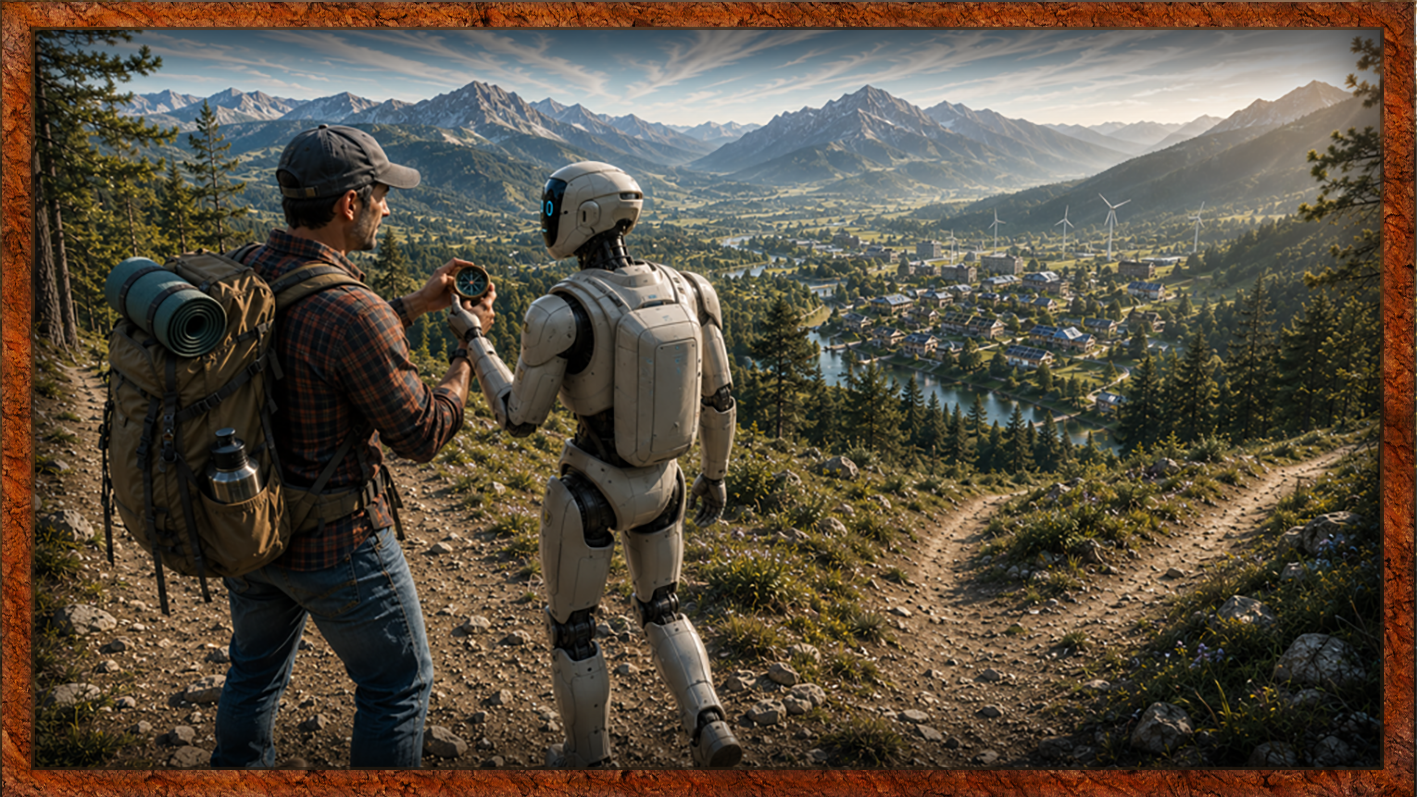
Purpose helps us define the nature of things, but it doesn’t exist in a vacuum. For example: We must be hyper-vigilant to ensure that we understand the difference between a metric and the essence of advancement. A high grade does not represent learning; money does not represent value; a digital metric does not represent human connection. If we choose to inflate the value of a metric over the essence of achievement, humanity would surely fail.
That led me to question the purpose of education. It popped in my mind shortly after I wrote the article concerning Ignorance, where I touched upon how the educational system always seems to get maligned, ignored, or straight out bastardized to where its purpose is buried under a mountain of profiteering, graft or unabashed ineptitude.
According to UNESCO, the purpose of education is defined as a way to:
“Empower individuals by developing knowledge, critical thinking, and essential life skills through a purpose that spans four core areas: Personal Growth, Economic Empowerment, Socialization, and Civic Engagement.”
One of the challenges in writing is creating something that will be informative; something that is relevant or at least built upon a subject or a notion that perhaps has lost its relevance and needs to be brought back into the light of day.
Purpose became one of those subjects.
The purpose of education does go deeper, but our search for purpose goes even further. Addressing the first question inevitably leads us to another situation. If education exists to prepare society, we first need to understand the purpose of those human beings it serves. The problem is that we’ve been so distracted by such inordinate amounts of bovine excrement that our search for purpose has strayed far from its roots. So I wanted to address the notion of purpose as it relates to the overall essence of human existence.
The Definition of Purpose
According to the dictionary, purpose is:
“The reason for which something is done or created or for which something exists; it’s a person’s sense of resolve or determination; a particular requirement or consideration (usually purposes) that is typically temporary or restricted in scope or extent.”
Humanity doesn’t have a universally agreed-upon purpose. It varies by perspective and by nature, and it ranges from our evolutionary survival to the pursuit of connection, knowledge, and the meaning of life itself.
As we evolved over the millennia, so did our perspective on the nature of purpose. It began as a cosmic connection. As we started to acknowledge the self, we looked at our surroundings and wondered about the purpose for it all. We began to see ourselves as the sensorial representation of the universe; the eyes and ears that would become nature’s chronicler. The more we saw, the greater our appreciation for the vastness of the cosmos.
Humanity evolved, and so did our capacity to understand our place in the world. Philosophy came into being, and we began to find the existential purpose for our being here. The nature of the individual now looked upon social structures, personal growth, and the benefits of living an ethical life within a society.
But above all, we understood that humanity’s core purpose emanated from its own biology; to adapt, survive, and ensure the continuation of the species. The more self-aware we became, the more we understood the importance of our surroundings. We took to being custodians of nature, for we realized that the very essence of our existence depended on our protecting the land upon which we were born, lived, and died.
What Is the Purpose of Human Life?
According to the folks at The Meaning Movement, the purpose of human life is:
“To contribute something that matters with the time you have; that purpose is to be found in what you give to others and build with your gifts, rather than handed down from somewhere above.”
They go on to say that the big question of human purpose is one that each person answers for themselves, and the answer takes shape through how you live, who you serve, and what you keep choosing day after day.
They broke purpose down to these main choices:
- Contribution to others. Purpose comes from using your gifts to meet a real need in the world.
- Growth and becoming. Purpose is the lifelong work of becoming who you’re capable of being.
- Connection and love. Purpose lives in the bonds you build with the people around you.
- Faith and spiritual calling. Many find their purpose in knowing and serving God, or in a sense of being drawn towards a higher power.
- Experience itself. For some, the purpose of life is simply to live it fully and pay attention while you can.
Philosophy’s Take on Purpose
Philosophy has played a major part in establishing what our purpose is supposed to be. The general idea was that purpose is not a cosmic truth that’s waiting to be found, but rather a truth or belief that you either build or discover. This has been defined through the examination of human nature, the choices we make as individuals, or the actions we pursue to give meaning to who and what we are within society.
There are a variety of philosophical approaches to the nature of purpose that span millennia, and I would suggest you read up on a few. They range from Aristotle and his views on Teleology, Marcus Aurelius and his adherence to Stoicism that comes from focusing on what is within your control, Sartre’s take on Existentialism and the nature of existence, Nietzsche’s harnessing of one’s passions and overcoming personal challenges, to recent explorations from Viktor Frankl and his studies on Logotherapy. The latter is a study of psychotherapy that sees the pursuit of purpose through the act of creating or doing a deed, experiencing someone or something, or even through the attitude we exhibit when in the presence of unavoidable suffering. When looking at these variations in search for the meaning of purpose, it’s interesting to note that the word philosophy is from the Greek “philos sophia” which when translated means “love of wisdom”.
The Journey of Purpose
In order to know where we’re going, we need to know from where we came so we might understand why our purpose has been changing. For brevity’s sake, I’ll break down that long journey into four crucial historical eras:
- Prehistoric – For early humans, purpose was driven by survival; the basics of food, reproduction, and protection. The meaning of life was sustained through Animism, which helped to explain the chaos found in nature. Purpose meant being a part of the whole and ensuring the spirits or early gods were kept happy in order to ensure survival.
- The Axial & Classical Age (800–200 BCE) – It was during this time when scholars and thinkers began looking for purpose in universal, transcendent truths. This would be grounded for millennia in the beliefs of a monotheistic God, Karma, or Confucianism based on practical moral values and social harmony. During this phase, purpose was predetermined by your place in the cosmic hierarchy; your submission to divine will, societal duty, and how you prepared yourself for an afterlife.
- The Modern Era – This era began to erode the idea that we were the literal center of the observed cosmos. As the sway of traditional religious institutions began to wane, purpose shifted primarily to societal progress. It was during the Industrial Revolution that purpose became heavily tied to production, economics, and labor. Purpose was no longer tied to a central motivation for serving a deity; it began shifting towards serving the advancement of society, industry, or the pursuit of financial stability for the sake of supporting a family.
- The Post-Modern & Digital Age – This transition represents the greatest paradigm shift in humanity. It altered human purpose by moving its focus from a mechanistic quest for absolute control to an interconnected, synthetic understanding of our environment. That transition is known as the break from The Machine Age to The Systems Age.
Machine Age v. Systems Age: The Shift in Human Purpose
To put it simply, this is where we are today. Purpose has been shifting from an analytical mindset to a synthetic mindset. Instead of breaking things down into separate components in order to control them, we’re exploring how to put things together to understand how they interact within a larger framework. It breaks down in this manner:
- The Machine Age
- The world as we know it is like a giant clockwork mechanism. In order to understand it, we break it down into indivisible parts to better understand its operational process through a linear cause-and-effect model. People are interchangeable within a larger operational system, and purpose is defined overall by external metrics of productivity, control, or domination over nature.
- The Systems Age
- As opposed to the breakdown of components in the Machine Age, the Systems Age is based on understanding how things are driven as a part of a greater whole. The function or purpose is based on the philosophical approach in Teleology where you aim to understand the purpose or function of a part from within the environment it exists. In this paradigm, social and corporate systems are seen as purposeful entities rather than mere mechanisms. And human purpose is no longer related to isolated achievements, but rather to the relationships with and responsibilities for wider infrastructures such as ecosystems, societies, and global networks. Systems theory proposes that while analysis provides knowledge, it’s synthesis that provides understanding.
The shift between Machine Age and Systems Age created a reassessment of how human purpose is addressed. Companies and technologies must now be geared to serve the purposes of the individuals whom they hire or service. The purpose now turns to a focus on a person’s fulfillment, well-being and an atmosphere for learning and growth. Corporate pursuits now need to reflect human endeavors, ensuring that both the individual and systems work towards the support of a global society. And with the advent of artificial intelligence, the human labor force should not fear elimination due to redundancy of labor, but as a means by which the labor force may focus on ethical directives and explore creative objectives for the good of the whole.
Cause & Effect
If you’re not quite seeing the potentiality for disorder and confusion from this shift, allow me a few moments to explain it further. Because this is more than a changing mindset; it’s unraveling to become the most consequential adaptation in human history.
When humans embedded within a Machine Age mentality try to apply that logic to running the Systems Age, they set the stage for creating a paradox whereby one system uses two incompatible components: A global interconnected infrastructure (the Systems Age) run by a restrictive political ideology (the Machine Age) with an outdated cause-and-effect linear process using incompatible metrics.
This creates a chasm because a Machine Age political system relies on a zero-sum policy for advancing domestic power while treating other nations like separate entities where only one can win if another loses. This creates a very specific way of looking at borders and power within a rising system (the Systems Age) that will need to connect through interdependent networks and decentralized governance; hyper-connected, mission-specific treaties, digital regulatory webs, and cross-border trade dependencies.
The Machine Age has always been defined by mass production, standardization, and strict social hierarchies. The Systems Age now aims to fragment these into complex social networks for easier communications. Yet despite using algorithms and social media to connect the world, the Machine Age mindset has only served to accelerate the creation of echo chambers, social polarization, and cultural divides. If this progression is to be seen as correct (or inevitable), then the arrival of AI is not merely another technological innovation. It represents the next test for whether humanity will be able to adapt its understanding of purpose.
In order for global AI interactions to function for the benefit of all, the human purpose needs to grow beyond traditional border-based ideas. The fractious nature of today’s human interactions have risen from centuries of distrust and separation, causing a detrimental shift in how we work with one another. Within a System Age, diversity is a prerequisite for survival. In the way that an ecosystem needs biodiversity to overcome a virus, a society needs diverse perspectives to solve complex problems. The destruction of any perceived opposing social group will damage the whole system. Interactions flourish for the benefit of all when they move away from eliminating differences and work towards finding ways for managing tensions between different groups. Because human psychology evolved for localized, linear environments, scaling our interactions to become a global, systemic framework will require specific mechanisms to bridge this ideological chasm.
Final Thoughts
The generational nature of our purpose went through a seismic shift during the Industrial Revolution. But it came with a price. Our human purpose experienced what Viktor Frankl called the “existential vacuum”; a sense of emptiness born from having total freedom yet no clear direction for the self.
In the 21st century, our social interactions need to coalesce in order to guide humanity in a direction that better aligns with our collaborative visions with AI. We’ll need a sense of purpose that sees unity, justice and an ethical kindness towards humanity as the means by which to expand our species as the global entity that it is. It won’t happen overnight; nothing within an epochal scale does. But it does have a beginning. And that beginning has to be centered around our humanity. For example:
- AI operates at breathtaking speeds; we do not. The intricacies of human relationships and institutional structures will have to evolve over time in a way that is incremental, systemic and deeply localized. On the other hand, technology will evolve exponentially. We must work together to explore ways for our educational, governmental and sociological systems to work within the realities of the 21st century without falling back on the limited playbooks that originated in the 19th century.
- AI is built entirely from the whole of humanity’s digital footprint. Our philosophy, our history, our biases, and all of our institutional records reside within its memory. If we choose to use AI to automate manipulation, generate personalized propaganda, and squash dissenting ideas, AI will become the ultimate tool for control. It will amplify the worst, most competitive, and tribal instincts of our nature. But if we choose to use AI to combine the whole of our historical data to unmask systemic biases and offer guidance to our global leaders in the future, AI will become a tool for the collective advancement of humanity.
We cannot change our global economic makeup overnight, nor can we instantly rewrite the purpose of global education. But by pursuing a purpose based on global unanimity, we can shift our focus to create resilient spaces within our families, our schools, and our local communities. And most importantly, we can revisit the benefits of individualized intellectual pursuits that value essence over metrics; wisdom over warfare.
The journey for our purpose needs to find its way back to our awareness of the cosmos. But this time, we need to explore our inner universe. By using tools like AI to better understand the whole of human nature instead of exploiting it, we might be able to reach a stage in our evolutionary development where we may slowly recover the essence of our humanity and the enduring gifts of human collaboration that the industrial revolution stripped away. As we journey towards the future in search of our better purpose, we should endeavor to do so today by working to rebuild our human foundation, one generation at a time.


What you have to say will go a long way…