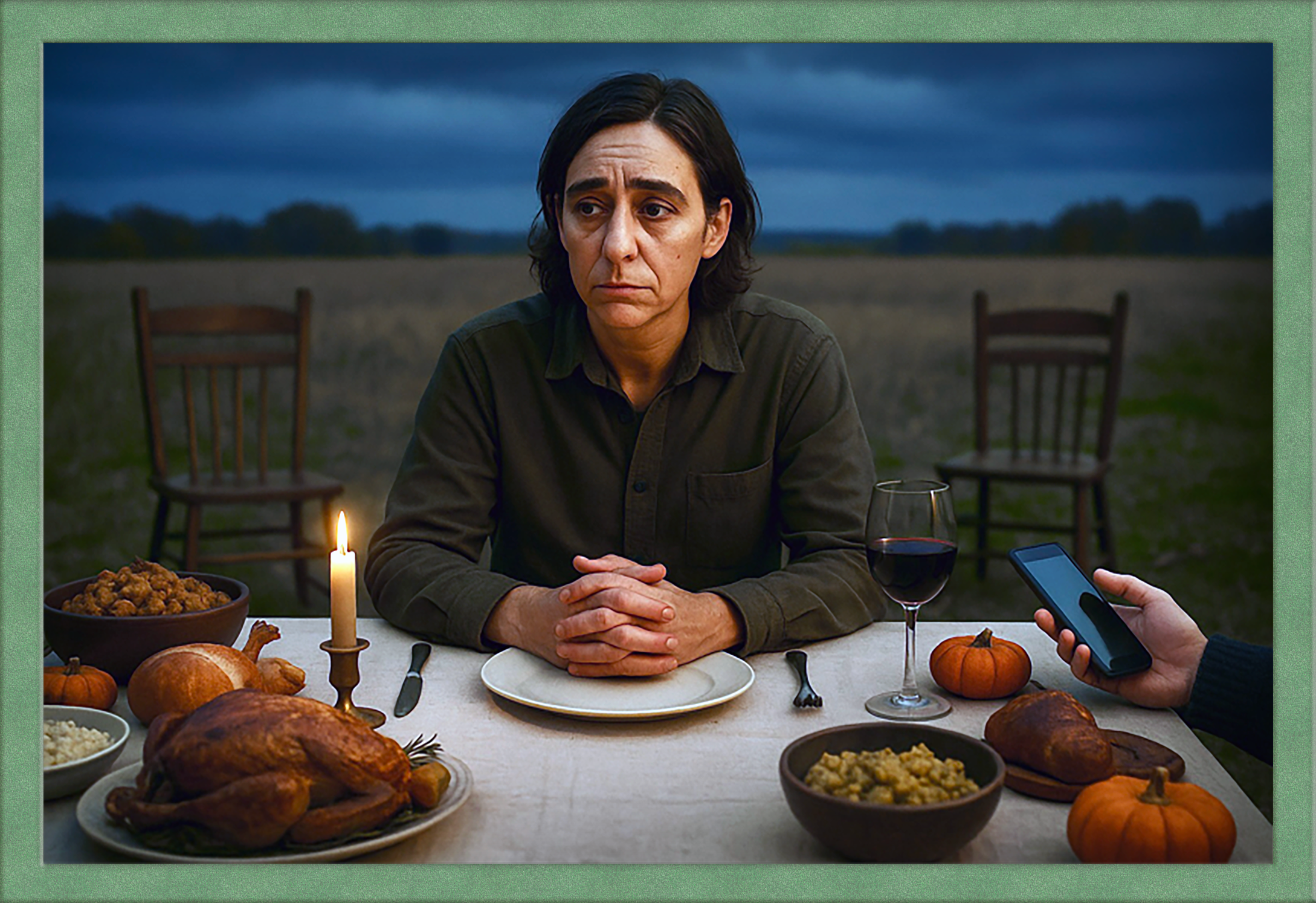
The feast of Thanksgiving is just around the corner here in the United States. Like most things in life, it began with everyday people celebrating a given occasion. In this case, the celebration was a gathering in 1621 between the Pilgrims and the Wampanoag tribe to give thanks for a successful harvest. And after a few years and many skirmishes, disagreements, and a ‘hail and farewell’ from Great Britain, a newly formed government came to be.
In 1789 and with the best of intentions, George Washington wanted to celebrate a national day of Thanksgiving and therefore issued a proclamation to that effect. Initially, the reception was somewhat muted. Certain businesses (e.g., calendar makers) saw it as an additional cost, while a few members of Congress felt that this new ‘day of thanksgiving’ would be an imposition on the traditional customs of their constituents. Even as a fledgling country, expressions of gratitude fell short. And because it wasn’t a mandatory annual event, it was seen more as representational than aspirational. Furthermore, since the inspiration for this day of thanks had occurred some 168 years in the past, perhaps the notion hadn’t quite coalesced in the young nation’s consciousness.
And that was to be expected. After all, the United States was in the midst of what you might call their Year of Firsts: The first meeting of the first US Congress, the establishment of the Judiciary Act of 1789, the establishment of the first executive departments such as the Department of Foreign Affairs (aka the Department of State), the Department of War (aka the Department of TBD) and the Department of the Treasury. 1789 was also the year that the Bill of Rights was proposed, and it was the year when a shiny, new Congress passed the Tariff Act to raise money for the shiny, new federal government.
It stands to reason that we, the people (back then) had a lot on their minds, so a Thanksgiving feast wasn’t high on everyone’s radar. Still, it was a noble and smart gesture for Washington to propose in 1789; he had just been elected as the first US president in the capital of the United States – New York City. I mean, you didn’t think he’d have a city named after himself just so he could get inaugurated in it, right? I mean, who does that?
But since then, a few other presidents who weren’t so bogged down with many ‘firsts’ decided to elevate Thanksgiving’s status amongst the populace. In 1863, Abraham Lincoln declared the last Thursday in November as a national Day of Thanksgiving. It was finally on the books and everyone was happy. Well, except for the animosity brewing in parts of the country due to the Emancipation Proclamation signed at the beginning of 1863. Then there were the logistics for the ongoing Civil War represented horribly by the Battle of Gettysburg in the summer of 1863. The tangential nature of that skirmish made a battlefield out of vast swaths of the American countryside; can’t expect people to celebrate a day of thanks while wholesale carnage takes center stage near their home. And lest we forget, there was the announcement of Lincoln’s Proclamation of Amnesty and Reconstruction in the winter of 1863. That instituted a pardon for any Confederate soldier who swore an oath of loyalty to the Union; a proclamation that raised the ire of Congressional politicians on either side of the aisle regarding the reintegration of the South.
So for three and a half score and six years, the holiday of thanksgiving was on a tenuous footing due to the inevitable effects of change. But in 1939, another president would breathe life into this faintly recognized holiday. That’s when Franklin Delano Roosevelt (aka FDR) decided to move the holiday to the fourth Thursday in November in order to extend the holiday shopping season. At first, this apparently caused a great deal of consternation, though I personally doubt that any of that was expressed by folks in the commercial sector. But then Congress chimed in, and in 1941 they passed a law declaring the fourth Thursday of November to be a federally mandated holiday for Thanksgiving. Luckily, the country wasn’t involved in anything important at the time, though I can imagine that some members of Congress became nervous once they contemplated the potential loss of votes from so many turkeys.
So here we are in 2025. We are the generations those past presidents and members of the federal government thought about as they established laws, mandates, holidays and even made a proclamation or two. Yet as each of those presidents went about their job of running the country, one cannot help but wonder how many of them pondered the effects that their actions – their choices – would have on the future of the nation. How many were concerned with their legacy as it affected the vast number of people living in the country at the time of their given terms?1 In life, there are no absolutes, so I would venture to say that some if not most of those past presidents spent some time thinking about history, the people, and the potential effects that would ripple through time.
But in 2025, I believe that kind of thought process is missing. If our current president were to gaze out the window and survey the world, I think his thoughts would be less about the effects that his actions have had on the country, and more about what he sees as his own reflection upon the world.
So are we thankful yet?
As we approach this holiday of thanksgiving when we share a meal with family and friends and thank God and one another for the bounty we have received, are we truly thankful? Are we sure that we know what is giving us the impetus to feel thankful? Let’s take a quick look:
- We’re thankful for our family. True, unless you happen to be in a military family. In that instance, you could be a mother or a spouse trying to reach a daughter or a husband who is getting ready to be deployed to a conflict zone that’s either somewhere in the American heartland or off the shores of some foreign nation as we exercise coercive diplomacy under the most suspect of reasons.
- We’re thankful for our friends. True, unless one of the many polarizing pronouncements coming out of 1600 Pennsylvania Avenue happen to land on the opposite side of an ideological argument, creating a philosophical chasm that you dare not cross or even acknowledge for fear of reprisal.
- We’re thankful for our health. No doubt – unless you happen to be wealthy or young or ill. For despite all the coverage you may possess, the weight from a medical emergency brought about by the vicissitudes of life can bury you in a mountain of debt. Future costs would most likely skyrocket while your purported defenders in Congress engage in lengthy debates as your health buckles under the unrealistic pressures or expectations brought about by a medical machine geared primarily for profit.
- We’re thankful for our freedoms. Indeed, we are – unless you happen to be someone who isn’t Caucasian or Christian or heterosexual or a naturalized American. Because differences have now become symbols of distrust. A prayer uttered in a foreign language could easily place you on an unexpected trip into madness. Emblems that before today were measures of individuality or beliefs, have now become reasons for distrust, harassment or persecution.
- We’re thankful for the food we eat. Truly an everyday blessing. That is, unless you take into consideration the rising cost of groceries. Frivolous price increases force some families to confront decisions between paying for a medicine or a meal, while compelling others to celebrate a day of thanks huddled around a holiday dinner that speaks less of bounty and more about the scarcity they’re made to face in a system over which they have little control.
- We’re thankful for our leaders. This is a given, but only if you happen to be blissfully unaware, incredibly naïve or quietly complicit in eroding a system of government that despite its many faults and failures, still offers the most opportunities for every person to be able to pursue happiness in a way that sits well with their beliefs and their heart.
- We’re thankful for the blessings that God grants us. This has been a foundational belief in the US – unless it’s not the Christian God or any variation of that God, for that matter. We’ve created a myopic divide between those who believe in a deity and those who don’t; those who believe in a Christian God and those who don’t. For this goes beyond the statement made by our Founding Fathers to separate a person’s right to follow their religious beliefs (or the absence thereof) from the Rule of Law. And that was to protect an even greater rule – that being the individual’s right to choose.
Final Thoughts
Don’t get me wrong; I love Thanksgiving. I cherish it deeply because it has always been the one holiday in which we purposefully turn to one another and give thanks for who and what we are to each other as well as for the gifts of love, friendship, hope and camaraderie that we collectively treasure. It’s a time when we gather to celebrate the best of what makes us human. Those parts of ourselves that cherish empathy, kindness, and the blessings that are to be found in our diversity of thought and beliefs. The rewards that come from the manner in which we include one another into the fabric of our respective lives that makes us stronger, better, and safer.
Back in 1621, the Pilgrims knew that they would have to face seemingly insurmountable odds. They prayed for guidance, and it came to them in the form of the Wampanoag tribe – a group of indigenous people who extended their hand in friendship. Before long, both groups of people would come to understand how a collaboration could address their respective concerns: The Pilgrims in dealing with a harsh environment for which they were wholly unprepared, and the Wampanoag people’s concerns with the Narragansett, a neighboring tribe that was aiming to expand its territory. So a treaty was signed; the Wampanoag people taught the Pilgrims how to fish, hunt and farm their land, and the Pilgrims would in turn help the Wampanoag people defend their territory.
But a devastating and unforeseen set of circumstances tore apart that tenuous covenant. As more people began arriving from England, new diseases spread throughout the colonies for which the indigenous people had no immunity, and so the Wampanoags’ numbers began to dwindle. The Pilgrims found themselves in a position to bargain, yet instead they chose to take rather than to trade; what they wanted was more land. With the Puritans demonstrating a disastrous predilection for deception, the Wampanoags – still bearing the sting and confusion of losing a portion of their tribe and the deceit perpetrated by the Colonists – had no recourse but to fight for their survival.
In less than half a century, our ancestors went from thankful to thoughtless; appreciative to apocalyptic. We, the (early) people provided a great disservice to this country by demonstrating to the indigenous people that morality was mutually exclusive from the piety of religion. Of course, the blame for this mess could be placed mainly on our human nature; we are only as good as the intentions we pursue as reasoning human beings. And although we recognize today that the real battle continues unabated between our limbic system and our prefrontal cortex, that is an issue for another day. This article is about our ability to answer one simple question:
Are we thankful yet?
When you consider that in this moment in time we have distilled everything that was carefully designed and given to us by our Founding Fathers and turned it into the distorted reality vortex we live in today, we need to consider these truths:
- We’re thankful for our family and friends, yet a mother is leaving an empty seat at the Thanksgiving table in honor of a son whose military unit was pressed into action by a sociopolitical web of deceptions and self-interested politicians.
- We’re thankful for our health, yet someone’s child just passed away from an illness that medical experts once claimed as having been eradicated. That was until a newly appointed wave of sycophantic neophytes charged forward under the banners of medical quackery to impose untested or unsafe practices that are now threatening the nation’s overall health.
- We’re thankful for our freedoms yet we’re losing our ability to empathize or fight for those whose human rights have been stripped or placed in untenable situations that go against the very same precepts of reason and self-control upon which our country was founded.
- We’re thankful for the food we eat, yet the greed that we’ve allowed to grow unchecked now forces a family of four to barely afford a meal for two. And beyond the borders of our nation’s territory and wealth, we’ve also denied the basic human need for sustenance to scores of people on a global scale, to such a degree that we’ve allowed millions of dollars’ worth of food to rot in the sun.
- We’re thankful for our leaders, yet we continuously turn a blind eye to the rampant malfeasance they impose upon the people, while some members of our national triumvirate continue to find ways to excuse criminal behavior under the guise of following the whims of the majority.
- We’re thankful for the blessings that God grants us, yet we have the audacity to reinterpret the overarching messages of peace, unity and love by turning the cross into a sword of retribution as we deny God’s blessings to others while feigning a clear conscience.
So on this Thanksgiving Day, let’s not be ashamed for what we’ve become; let’s be thankful that we still possess the ability to do better. Let’s not judge our neighbors by whatever it is we believe; let’s be thankful that we still possess the ability to recognize the love and compassion from those who live all around us. Let’s not continue to wring our hands in supplication for a better country; let’s be grateful that we possess the ability to know right from wrong and have the temperament and tenacity to recognize right and reason and the tools we need for constructive action.
As you sit down this year to celebrate the feast of Thanksgiving, take a moment to understand its elemental purpose – it’s right there in the name. Reach out to take the hand of the person next to you and remember those who are absent in flesh but forever present in spirit. As you look up and see the smiles on the faces of those whom you love and cherish, remember that gratitude is neither a passive nor a seasonal feeling, but rather a choice we must make again and again to honor those who came before us, to pray for those who are no longer with us, and to establish a sacred trust of unity and collaboration in honor of those who will sit at these ceremonial feasts of thanksgiving long after we’re gone.
- Fun Facts: The US population in 1789 was 3,929,214; in 1863 it was on the north side of 31,443,321; in 1939 it was 132,164,569. And in case you were wondering, the population in 1621 was estimated at 2,302. ↩︎


Leave a Reply