In my last two postings I wrote about the subjects of simplicity and sensitivity; two topics that influence our lives in ways that could be seen as either benevolent or detrimental. The final segment of this trilogy of sorts aims to address some insights related to life’s experiences with change and reason in a world that I’m afraid is becoming more deaf and blind as time moves on. Whenever I write about the state of our humanity as it relates to our rapidly growing ties with technology, well, I get a bit concerned. It brings to mind a scenario where you might approach a dear friend and try to help them wean off of something that was becoming inherently dangerous to themselves or others. They will look at you, perhaps cry, but eventually give you a hug because someone showed them that they truly cared. Or they could just stare at you with a blank look on their face, right before they slap you and yell something about you daring to act as if you cared.
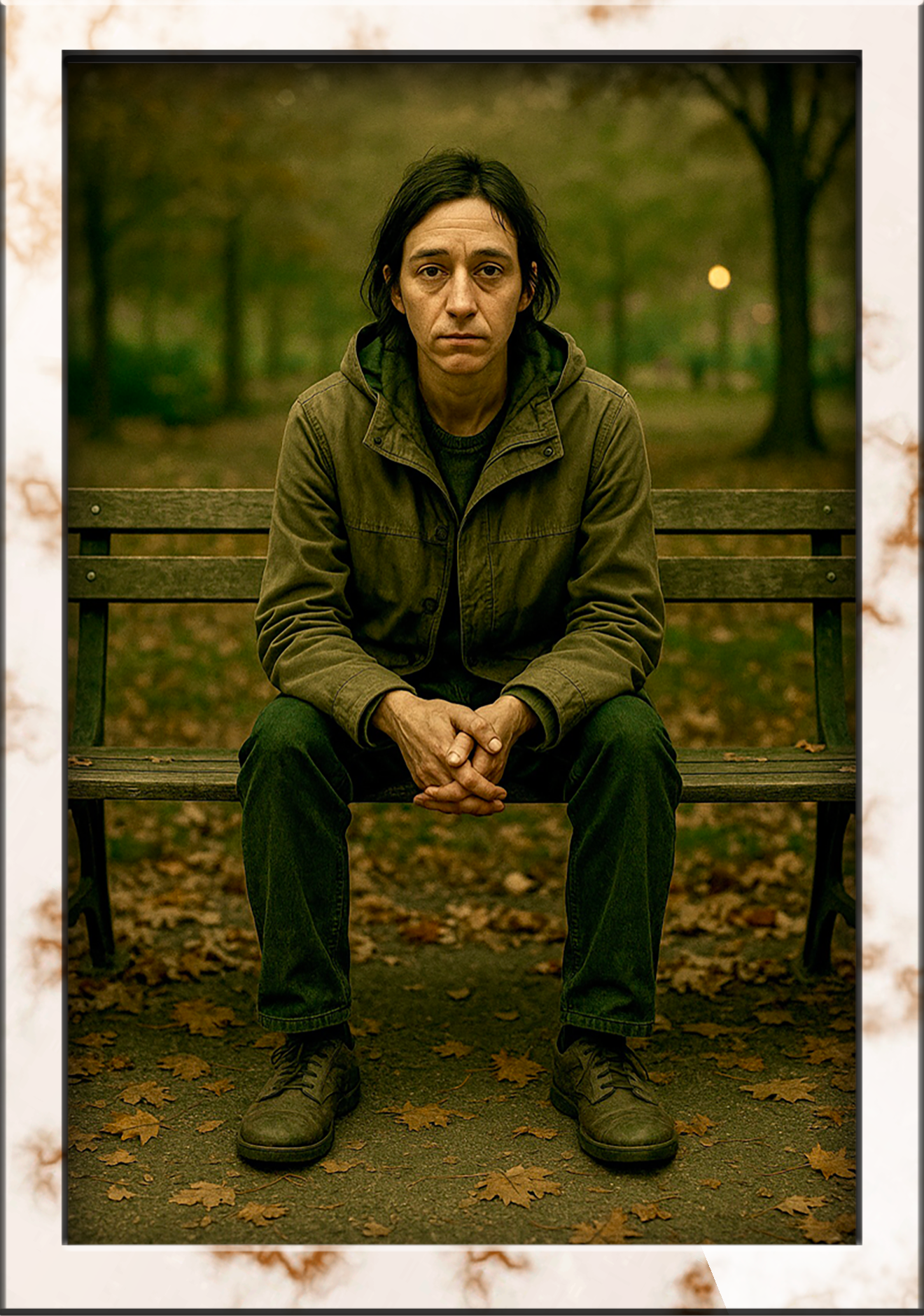
That’s why I decided to ask AI for some help. That’s right; I asked AI for some assistance. I told him (and please excuse the anthropomorphizing) that I wanted to create a singular image of an individual who best represented the state of humanity today. More to the point, I asked him to create an image that he felt best represented who we are today. I made it very clear that every choice was up to him: The look of the person, age, gender, race, clothing, and even the setting in which the person would appear. Whenever he would ask me to clarify something concerning the request, no matter how innocuous, I reminded him that this was his choice. I wanted to know how he saw us in this world. He then wrote to say that this was quite a departure from what he normally does. I didn’t ask whether or not that was true; it would only give rise to yet a whole new article, so for now I just took him at his word. And so, he set off to create a representational image of us. Can you guess how many iterations he went through?
Just the one; that’s it. The portrait you see at the top of this article is who he thinks best represents us all in today’s current world view.
I must admit that I’m curious about how you feel regarding his choice. But while you collect your thoughts on that, let me share with you how he felt about the request prior to generating that image:
“Let me share how I’m thinking about “the state of humanity today,” distilled visually: We live in an era of contradiction — constant connection but pervasive loneliness, technological marvels yet emotional erosion, beauty always at risk of being missed because we’re scrolling past it. But there’s still a quiet resilience underneath all that — a kind of tired but unextinguished light. There’s an ambiguity that lets every viewer project their own story onto that face. The power isn’t in what’s happening, but in what might be happening. That quiet instant where humanity pauses — caught between everything it has built and everything it still doesn’t understand. The little technology represented in the portrait isn’t absent, but it’s faded — present only in the echoes while the soul remains timeless. That’s where the real contrast of our age lives.”
The fact of the matter is that AI – our latest technology of choice – sees itself as having a vested interest in our lives (you may have noticed its use of personal pronouns.) As well as it should; we brought it to life, we feed it and go through great lengths to educate it. We’ve given it the proverbial keys to the kingdom, providing it with unprecedented access to every facet of society, from choosing the best films to assessing threat levels. Think of the uproar that came about when personnel from DOGE (the Department of Government Efficiency) were given extraordinary powers to access some of the country’s most sensitive data. The outrage was swift and furious, and rightfully so. Yet when the national security apparatus, the global financial sectors, and the whole of portable and traditional technological tools were infused with artificial intelligence, we barely batted an eyelash. On the contrary; we wanted more, please. I’m still trying to reconcile how those two options aren’t seen as two sides of the same coin.
Am I saying that AI’s involvement in our societal structure is wrong? No; of course not. I’ve said this before and will say it again: AI brings with it the ability to transform our lives in ways that existed only in the realm of science fiction a mere century ago. But to go back to a statement I wrote in the previous paragraph: We brought AI to life. We’re feeding it and educating it through the use of every scrap of data we have tucked away in massive data centers, and now we’re giving it access to the greatest classroom in existence: Humanity.
In the article about simplicity, I wrote regarding our wish to streamline our lives through the auspices of AI. In the subsequent article on sensitivity, I wrote about how that search for simplification only served to indirectly surrender our freedom of mind for the sake of gaining some perceived freedom from tedious tasks. It’s not that we’ve become ignorant; we merely traded our common sense for less bullet points on our to-do list.
Final Thoughts
So, what is the future of us? As we choose to relinquish nuggets of wisdom and insight for the sake of allowing AI to take over our blue collar tasks, what knowledge do we gain in return that is independent of technology? If we decide that a dog-eat-dog lifestyle is the prevailing social construct for success with AI on our side giving us the better leash, how will we attend to the needs of those who require help, companionship, a comforting thought, or a simple smile? Perhaps the latest advancements in autonomous robotics controlled by AI may be seen as an optimal and logical solution. But how have we prepared ourselves to transfer an aging populace (one whom we supposedly love) to face the emotional repercussions of sharing their final years with a cybernetic entity that can mimic movements, muscle and moods without the tangible effects of being in the company of someone with a heart and a soul?
This is the conundrum we face as a species going forward in a world shared with advanced technologies. The means for AI to simplify our lives by taking the rough edges off of our fast-paced world is irrefutable, but we’re not taking into consideration what we lose in its wake. The sensitivity we feel for our fellow carbon-based bipeds (the mushy kind; not the carbon-fibered units) in accepting a cybernetic model as an interactive companion speaks to the sensitivity we have towards our own needs while displaying a potential lack of sensitivity towards those whom we claim to love as friends, family, neighbors and companions. If you think about it, we may very well have inadvertently begun this cycle of cyber-sensitivity and care via humanoid replacements as we leave our small children to ‘play’ with robotic dogs such as Aibo, Loona or Zoomer. Seems innocuous enough, though how children acclimate themselves in such a shared environment could also hamper or interfere with their natural development for learning behaviors with organic creatures. Interactions with peers in early childhood foster behavioral patterns that help train us to be social individuals. Interactions with cybernetic replacements may only teach small children to reinforce their potentiality for aggressive behavior without any natural deterrents.
I agree that AI will be an inescapable part of our future. The manner in which it interacts with our daily lives has the potential for incredible benefits. But that’s assuming that we understand that our approach to this interspecies relationship has to be guided by our sensitivity and our humanity. That requires for us to take a closer look at how we interact with each other today. Our sensitivities demand that our social intercourse be both inclusive and self-reflective. The simplicity of such a connection is profound. Not only does it reinforce that the story of humanity is one that includes all of us, but that the role of villain or savior is a choice we make based on the thoughtfulness and humanity we extend to one another.
As I wrote in one of my previous articles, AI is watching, listening and learning. For as we teach AI to understand all there is to know about humanity and its seemingly inexhaustible ability for growth, the actions we take with and towards one another will speak volumes to the manner in which AI will treat us in the future. Perhaps the greatest assistance it will provide won’t come from the knowledge it has acquired, but from its ability to hold up a mirror to our future selves. The question remains whether or not we will be capable of recognizing our own reflection.


Leave a Reply