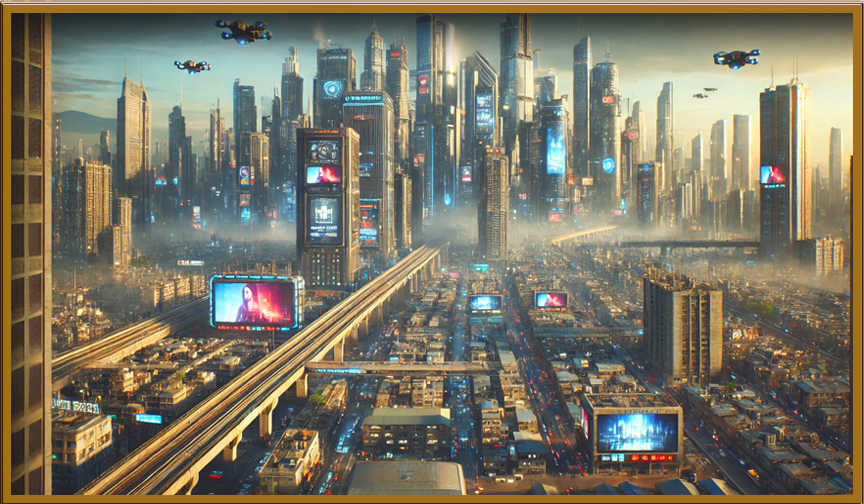
Today as Tomorrow’s Cautionary Tale

The tradition of blending human characteristics with those of animals has been around for over 40,000 years. It started with zoomorphic animal figures shaped to symbolize gods embodied in humanoid form. Today, highly detailed anthropomorphic characters can be found in everything from video games to anime; from greeting cards to Disney to the MCU. It’s an inventive way to attribute certain behavioral characteristics to humans by equating them to creatures well-known for their respective instinctual traits.

For example: When you look at the picture of the snake shown here, chances are you envision a sneaky or untrustworthy character; certainly someone up to no good.

Snake in the grass is a phrase that may also come to mind, and rightfully so. Beyond the universally accepted beliefs about snakes (which I’m sure many a herpetologist would argue as unfair), this representation of a snake with a less-than-trustworthy grin sends a clear signal.

Or take this example:

This happy-go-lucky fellow probably elicits a sense of comfort; a burly friend with a heart of gold. Although a business suit generally conveys an image of power, swagger or control, that’s not the case here. The suit is somewhat disheveled and not a perfect fit. The shirt; nondescript. And the tie? Probably a clip-on. The look of genuine interest and friendliness on his face conveys to you that he wears a suit to make a good impression; nothing more. His eyes are bright and inviting; his hair is tussled yet fits him well. Although an encounter with a bear in the wild usually elicits a healthy dose of concern, this caring creature could be a close cousin to Smoky the Bear. His entire demeanor conveys a character that is friendly, approachable and collaborative. A nice bear.

It’s easy to see how this blend of human and animal traits create a powerful imagery. Although the brain knows that such combinations are impossible, they still trigger very specific signals that either warn or invite; bring up your guard or lower it. It’s an effective way to convey an emotional response. By associating certain attributes from animals to specific human features, they merge to build either a persona or help establish a pattern of social behavior. When such integrated compositions are viewed, they automatically begin to elicit a feeling or impression. If you’re looking at these constructs as part of a discussion or when reading an article or perhaps data-mining, they’ll either connect or clash with your established viewpoints and eventually weigh in whenever your mind is ready to form an opinion regarding a generalized or contested truth. They may come across as a form of entertainment for the most part. But in some circumstances, they can be used as a subliminal way to persuade an individual to arrive at some preestablished point of view. When disseminated to large groups of people, they can even be made to sway public opinion.

There’s an expression about opinions (floating about in a less sanitized version) stating that they’re as universal as, uh, belly buttons. And that’s very true. Opinions are personal estimations about something or someone based on a collection of thoughts, ideas, expert assessments, or lessons learned gathered somewhere from someone along our journey through life. We weigh in these various perspectives to arrive at our version of an opinion. When an interesting dynamic such as these anthropomorphized characters are added to the mix, certain viewpoints are interjected into your decisional process that are partially based on verified occurrences in nature along with a possible dash of curiosity, amazement, concern, or even a pinch of purposefully constructed perspectives.

Final Thoughts

The examples shared in this commentary were generated by an AI LLM (Large Language Model). I asked it to design anthropomorphized representations of the snake and the bear using human qualities I chose. I then asked the AI to place each in a forest setting to avoid any human constructs that might sway its choices. AI did just that based on the parameters given, yet the forest it chose wasn’t exactly what I envisioned. AI’s first take initially chose a background that was (per its description) a serene, wooded area…..lush and natural, with no animals or human-like figures, creating a peaceful and untouched wilderness setting. It took a few tweaks to get the background I wanted; the backdrop AI initially reimagined from the movie Bambi wasn’t exactly it.

In general, AI models compile information based on data available to its algorithmic engine to comply with a request. If the descriptions it receives are either vague or lack specificity to arrive at the right choices, AI will do its best to conjure up a reasonable facsimile. In certain circumstances where a request will demand from AI that it either prove or refute a given argument, AI, on occasion, will hallucinate the results to provide the desired solution. In other words, it’ll make things up.

Now, I cannot speak with any certainty as to the parental habits of previous generations other than my own. But I think it’s safe to assume that most parents will caution their children about the information they choose to consume. In today’s globally digitized world, information reaches pretty much everyone through means of auditory, visual, or print media. The added informational conduits provided by AI LLMs have expanded the amount of available data exponentially. Unfortunately, its overall quality hasn’t improved by the same measures. The levels of sophistication may be both breathtaking and confounding, yet even the most savvy of users will still fall prey to fabricated digital constructs. The expression garbage in, garbage out still holds a healthy dose of cautionary wisdom after almost 70 years.

After all is said and done, you should enjoy your digital adventures as you explore the seemingly unlimited portals of available information. But keep in mind the mechanics behind the delivery. You don’t want to find yourself looking for an anthropomorphized teddy bear whose personality traits were designed to more closely convey this:

6 responses to “Today as Tomorrow’s Cautionary Tale”

  1. Frank, this is such a fascinating topic, and one I am glad you bring to this forum.  I find AI compelling, how it intertwines art, psychology, and ideas, like giving the mind an endless canvas—one that allows us to create, reimagine, and push boundaries in ways we never could before. AI certainly shapes our perception, especially through something as seemingly simple as the anthropomorphized characters as in the images you produced, is a powerful reminder of how suggestion and narrative influence not just entertainment, but the way we see the world.

    From a creative standpoint, I think AI is incredible. It can open doors to storytelling, education, and imagination in ways we never thought possible. But at the same time, it’s a force that can subtly (or not so subtly) shape opinions, reinforce biases, and even fabricate realities. Just like the bear and snake in your examples, AI can determine how we interpret something before we even have a chance to form our own conclusions. And that’s what makes me uneasy. With power comes weariness. The more AI refines how we process information, the more it threatens to strip away the very things that make learning deeply human—intuition, doubt, curiosity born from struggle, and the lessons we gain from mistakes. I worry that as we lean into AI to think for us, we might lose the raw, imperfect essence of discovery, the part that makes knowledge truly ours.

    I just want to say that AI can generate, but it cannot imagine. It can predict, but it cannot truly wonder. And as you just demonstrated, its most compelling outputs still rely on the vision and talent of the human mind. ??

    1. Maria – thank you for your great observations. Coming from an artist such as yourself, they really strike a perceptive chord. When I was young(er), I used to bemoan the fact that I was, at best, a marginal artist. Being involved in technology since my 20s, I used to wonder and hope that a software would be created that would allow doodlers like me to create what was in our minds. Then AI came onto the scene. As you so intuitively assessed, AI does open doors for storytelling, education, and a means by which to realize the most fantastical aspects of our imagination. But the key item to focus on there is that AI opens doors. Yet opened doors cannot discern between a teacher or a terrorist; an instructor or an instigator. AI’s threshold is democratic in that it allows everyone equal access. Yes; AI does have certain safeguards in place to discourage or altogether stop someone from using it for outright destructive, demeaning, or subversive acts. But it doesn’t (yet) have the sophistication for discernment whereby it can deduce from certain seemingly innocent actions, queries, or prompts that the human user is up to something nefarious. Right now, it takes a human being to provide that instinctual guardrail. Like AI, public libraries possess a great deal of information. And like most any piece of information, it can be used for amazing or atrocious means; it all depends on the mindset of the user. And in the same way that a librarian’s mandate is to provide access to information for all (again, with certain safeguards in place), they are not trained to discern the intentions of every person who walks through their door. Does this mean that information should be restricted? No. But it does mean that we, the public at large, need to be mindful of what is out there. We need to learn how to recognize the signs of outright manipulation; to find the little chinks in AI’s armor that let us know that what we’re seeing isn’t necessarily what we’re hoping to get. I’m absolutely thrilled at the prospects that AI brings for the future. But that excitement comes from a place that you honed in on so succinctly: AI can generate but it cannot imagine; it can predict but it cannot truly wonder. That all needs to come from humanity’s version of AI: Amazing Inventiveness. As always, thanks so much for sharing your thoughts!

  2. BEING FRANK DOES IT AGAIN! Thnaks for clarifying all the mystery that surrounds AI. I was beginning to feel stupid and very reluctant to enter the controversial discussionssurrounding AI, Your latest blogs answers a lot of questions & concerns. Wish you everysuccess as you stay on track in 2025. Meanwhile, your ‘…Cautionary Tale’ is logged in & filed on my complete & total inventory list of Being Frank posts.

    Chas

    1. Dear Chas – First and foremost, it’s wonderful to read your comments again! I know that you’ve had an incredibly difficult and painful journey these past few months. So seeing you online is a wonderful sign that although your journey to wellness is still underway, it is heading in the direction we’ve all prayed and hoped for. I’m so glad that the posting on AI shone a small light on the subject for you. God knows that what I shared was infinitesimally basic, but I at least wanted to explain some of the pros and cons of this technology that is growing by the second. It generates cause for concern as well as celebration; a duel-edged sword that has so much to offer while brandishing its potential for weaponization. I’m curious if you saw the “easter egg” I placed in the commentary – a hidden message that isn’t exactly hidden, but should spark further conversations about AI. If or when someone points it out, I’ll be happy to post a follow-up. For now, take very good care and rest well, my brother. Lovely to “see” you again, and thank you for your amazing support!

      1. Frnk,

        I went back to search for the ‘easter egg’ message and could not come up as to where it may have bee hidden. Of couurse the first places I looked were ithe 3 pix of the snake & friendly & ‘cautionary’ Teddy Bears. No luck there, so I’ll try again to find it in your commentary.

        Chas

      2. Dear Chas – My apologies, as I didn’t mean to send you off on a hunt. The “easter egg” isn’t hard to find at all; keep in mind that I referred to it as “a hidden message that isn’t exactly hidden.” I’ll make this very easy: The minute you open up the commentary to read it, you’re staring at the “easter egg”. ;-)

Leave a Reply