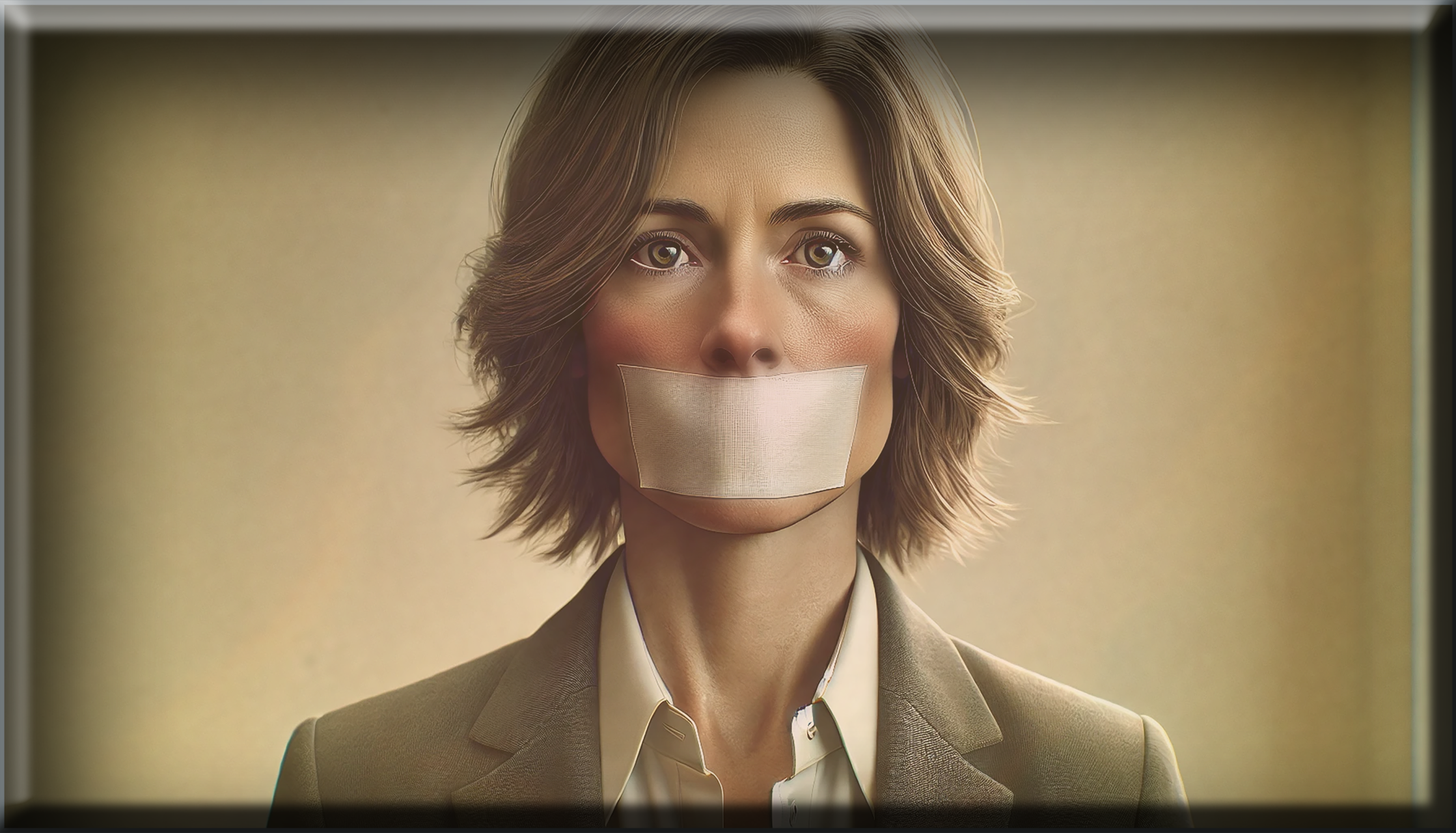
Numerous reports have been surfacing since November 6th revealing a sudden increase in misogynistic threats in the United States. One such statistic noted a 4,600% rise in the use of rhetoric against women just on the social media platform “X” alone. To say that this surge is distressing is an understatement. Simply put, it’s an explosion of targeted hostility. Yet, the real question to ask isn’t why it exists; that’s been made quite apparent in recent years. We need to be asking why this has been allowed to fester for so long?
At first glance, that may appear as a very loaded and perhaps very naïve question. Misogyny has been around for millennia. Yet based on what has been happening since election day, it has reached a new and warped level of depravity. In case this was somehow missed by a large swath of the US population, moving into the future carries with it the hope for a forward momentum that would raise our intellect, empathy, and understanding – not expand the scale of our ignorance, contempt or toxic masculinity. In all honesty, the appalling effects of misogyny should be obvious to everyone. And if someone thinks that it isn’t, then there’s a good chance they’re part of that silent minority that is feeding the problem.
I’ve been blessed to have known and loved two incredible women with whom I shared my life. Although at first I was still relatively young, masculinity was never about power, possession, or provocation. It was about being strong enough to provide my partner with every opportunity for exploring her passions; to give her the latitude to examine the strengths and talents within her heart. When I met my beloved CeCe, life was about sharing the best we each had to offer one another. It was understanding that challenges would only make us stronger because they showcased what true love was capable of doing for ourselves, our future, and for those whom we loved, respected and treasured. Years later, when CeCe would face the specter of death, survival wasn’t tied to any notion of gendered strength. It was about the transformative nature of love; one last gift of peace to be shared in those final moments of life. In the end, her lasting legacy became more than just about love or compatibility; it revealed that our enduring human connection was the source of our strength.
Bottom line: There are no compelling or morally justifiable arguments in existence that favor the demeaning of women because someone doesn’t have the capacity or the guts to string two coherent and logical thoughts together for the sake of having a constructive conversation without fear of repercussions, disrespect, or emasculation.
The Roots of Resentment
Misogyny has been studied since the days of the Greek philosophers. Yet beyond a few enlightened moments, most men throughout history have had neither the sense nor the courage to acknowledge misogyny for the disgrace and obscenity that it is to society. Aristotle believed that women were deformed, inferior versions of men. Yet he believed that marriage should be carried out with a sense of virtue and a form of friendship where the man would hold authority over his wife. With all deference to Aristotle, a friendship under the yoke of a restrictive authority is nothing more than a thinly veiled and contemptuous form of slavery. Ever since then, misogyny has grown to be the philosophical and sociological equivalent of an onion: Containing multiple layers that, when peeled away, will invariably make you cry.
This reprehensible and stagnant behavior has been analyzed for myriad reasons and tied to issues related to sexism, patriarchy, equal rights, gender inequality, racial inequality, stereotypical biases, and socialization regarding the traditional roles in society for males and females. But beyond these, there is one fundamental issue that I believe provides the flimsy foundation for it all: The wanton disregard for (or a complete absence of) a concept of humanity.
I’m choosing to bypass a discussion on the fears that exist related to sexual orientation and gender identity, but not because they aren’t real or important. These are very real and deeply contentious subjects. But they should be addressed in an open forum with people who are willing to explore our inability to understand or recognize the value, rights, and complexities of being human and its inextricable ties to our humanity.
Humanity 101
So, what is humanity? According to the dictionary, it’s the human race; human beings collectively; the fact or condition of being human; human nature.
OK, so humanity is nothing more than a representation of the human race. But it’s also a condition of being human; it’s our human nature.
Then what is the essence of our human nature? Well, it’s defined as the general psychological characteristics, feelings, and behavioral traits of humankind, regarded as shared by all humans.
So our humanity is representational of the human race. And since that grouping is seen as a condition for being human, then it stands to reason that we are all, regardless of gender, human beings. That also implies that we are all brought into this world with the same behavioral traits of humankind. You know; human nature. I once again find myself quoting that very insightful line from the movie, The African Queen, when one of the main protagonists was addressing that very subject:
“Nature, Mr. Allnut, is what we are put in this world to rise above.“
Here are a few realities we need to accept that relate to the true nature of being human:
- Amazingly complex and wondrous though it may be, the human body is neither perfect nor flawless in its design. And if you haven’t noticed, nature has never rooted for creating a homogeneous creature. Basically, we are all continual works in progress.
- Each of us is a member of the human race; a classification also known as a global community or a society. This may seem as a blatant and obvious fact, but our overall social behavior as of late has been screaming otherwise.
- Human rights should not have to be inscribed in rituals, laws, regulations, standards, governing documents, etc., any more than instructions need to be documented for teaching you how to breathe or cause your heart to beat. The respect, guardianship, and universal value of being human should be a primary right afforded to everyone.
- Restrictions that are in opposition to a person’s right to self-govern their own body and mind should never be imposed on any human being.
- An individual or group should never impose their beliefs or uniqueness upon another. So long as it neither impinges nor interferes with another person’s right to live freely within their uniqueness, each person should be allowed to express, exercise, or explore their individuality. It’s the social spice of life that provides countless opportunities for learning, creativity, and growth.
The Rights of Humans
But how do these ideals relating to our humanity apply to the subject of this commentary?
Misogyny is an affront to the principles or guidelines for the ethical treatment of all individuals who are accepted as human beings. Human rights should and must exist for the purpose of protecting all individuals from abuse, degradation, violence, sexual exploitation, and any other violations against any human being. If it’s part of our human nature then it needs to be a part of our sociological makeup. It’s deceivingly simple: If someone wants to man up and show off their masculinity, they should do so by showing respect and a reverential attitude towards the sanctity of the life that is within each individual. Women are an incredibly obvious, important, and unmistakable part of that statement.
But despite such basic and worthwhile ideals, many men continue to regard women as though they were exempt from being treated with humanity. They only see them as targets to malign, deride, or be preyed upon with impunity and malicious vigor. I’d like to remind those gentlemen of something they may have forgotten: Women are your mother, sister, girlfriend, spouse, aunt, niece, granddaughter, cousin, sister-in-law, mother-in-law, best friend, partner. They’re an intrinsic and inescapable part of your life – literally and figuratively. What they are not is a punching bag, a source of amusement, a target, a thing, a piece of property, an object of ridicule, a pussy, or a piece of ass. Do keep that in mind should you ever feel the urge to act out your worst impulses.
Before I wrap this up, I’d like to address one fear that has recently been bandied about on social media: The fear expressed by men of being marginalized; that women will supplant their place in the social hierarchy. Although women do make up more than half of the US population, in 2023 only 30% held the reins of key strategic positions within government or corporate C-Suites. In 2017, statistics showed that 22% of the US population thought that men were overall more capable than women, a concept fueled primarily by outdated stereotypes or beliefs rather than statistical factors related to qualifiable items like competencies. For those who fear this shift in the social hierarchy, you need to ask yourself, why? Greater equality invariably ushers in an era of fairness and progress that benefits all of humanity; why should it be any different when women make gains in leadership? It would allow for society to benefit from a governance with a balanced sense of perception and awareness; a leadership whose vision would far exceed its grasp.
The notion of patriarchy is thought to have begun sometime around 10,000 years ago during the Neolithic Period. People lived as nomadic hunter-gatherers in a quasi-egalitarian society where everyone contributed to the survival of the group. The rise of agriculture gave way to the need for settlements. This eventually led to the inception of land ownership, the concept of growing surplus food, and inevitably the need for safeguarding property. Social structures emerged as did class divisions and social hierarchies. Since men were physically stronger, they bore the brunt of working the fields while women were relegated to bearing children to create progeny so that male offspring would inherit property. Since women didn’t contribute food or other tangible goods, they were reduced to being second-class citizens with little societal rights. 10,000 years ago.
Final Thoughts
The legacy we owe ourselves as a species is to take a hard look at our concept of humanity and see how it measures up against what little social evolution we’ve achieved. For as long as we continue to venerate or identify with the notions of them vs. us, strong vs. weak, or men vs. women, there will always exist a vast disparity between our social progress and a fair and impartial assertion of human nature.
Misogyny is one of the most glaring examples of discrimination against the very nature of a person’s life. It doesn’t demonstrate masculinity; it reveals an inability to respect or even acknowledge the value of another human being. It tells the world that, as a society or even as an individual, we view humanity as a commodity to use when it suits us, offend when it pleases us, and eliminate when it threatens us.
At its core, humanity is about respect for every individual. As such, misogyny isn’t just an issue for women to face; it’s an issue for humanity to resolve. Change may not require a revolution, but it needs a quantum shift in perspective. So, the real question to ask is: Are we willing to take that step?


Leave a Reply