Author’s Note: I initially wrote this commentary about seven years ago when the US was in the midst of an, shall we say, interesting phase of existence. As I observed the machinations at hand back then, I was reminded that everything in life has a tendency to move back and forth; to change direction for the sake of advancing towards or away from an issue, problem, or relationship. So as I was contemplating what to write this past week, this commentary came to mind. Perhaps because of my self-imposed deadline. But I think it was more because we seem to be in the middle of shifting things again; changing directions for the sake of a better outcome; a more rational way of thinking. Time, persistence, and common sense will tell. I’ve updated certain thoughts and greatly redacted the original to save you from wading through my various avenues of thought; you have enough on your plate already.
There are many terms to express the notion for reversing a given thought, ideal, proposal, or law. It’s an inherent right for anyone on a given side of an argument or generational philosophy to actively seek to sway the opposition in their favor or do what they can to support an idea that is on a rising trend. Backing a winner has always been the purported smart thing to do, and we here in the US did once fancy the notion of backing the underdog. After all, the original colonists were exactly that on several levels, and many foreign powers that were sympathetic to their cause rose in defense of their notion of independence. To a great extent, they helped build this nation into what it is today. Well, what it proposes to be today in spirit. But the point of this commentary isn’t about patriotism or collaboration, or even our global endemic relations. It’s about that singular act of support; where support becomes alive – not by its nature as a transitive verb, but as a noun that signals the belief in a given system or philosophy contrary to others, and what it takes to provide that support. It takes a push.
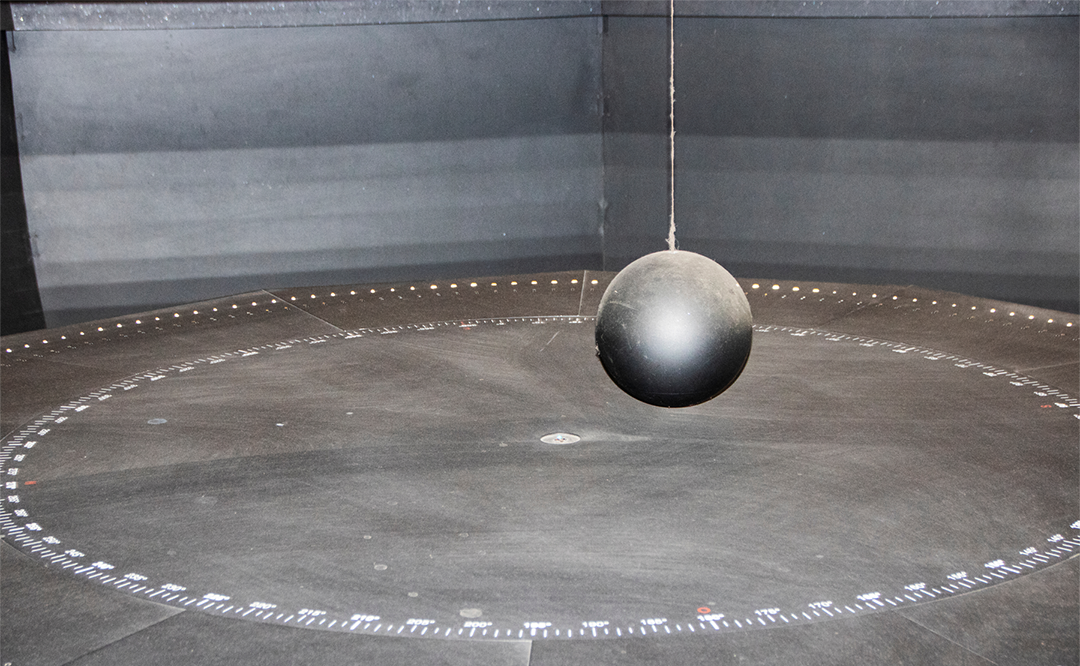
A pendulum is a simple weight that, when suspended from a pivoting point, will swing from side to side when pushed away from its equilibrium (or resting) point. This side-to-side movement (referred to as a period) will vary based on factors such as its mass, its length from the pivoting point, on gravity and, of course, the force that is exerted upon it.
I was observing one the other day, and the repetitive back and forth motion conjured up a series of almost instantaneous visualizations that skipped across several current events, both personal and global. The dynamics of a family discussion; the conversational interplay between two friends; the latest smattering of political elections throughout the world. In each scenario, the motion starts with an idea, a movement, or an ideological belief – the push, if you will – that is exerted on a social/personal pivoting point that is naturally receptive to any external force or influence. This ideological or theoretical push exerts its influence on that pivoting point, and soon it begins to sway. Naturally opposing forces are unavoidably waiting for it at the other end of that swing (or period), and the movement initiates this back-and-forth interplay, driven by forces generated by the initial push. Without additional influence from an external source, these periodic swings will run their course and the object will eventually return to its balanced position. However, if force is continually exerted upon that central mass, the pendulum will swing unendingly until something brings it to a halt – or it loses its connection to that pivoting point.
I have no doubt that I probably mislabeled some of the components or actions of a true pendulum, and for that I do apologize. I am neither an engineer nor a physicist and lay no claim to any sort of expertise other than that of an inquisitive lay observer. But if we take this somewhat fractured analogy and ascribe it to the human condition, certain causal realities come into play. Those side-to-side periods initiated by a force from either side start to take shape, but it’s the push from the originating side that will invariably get more pronounced as the opposing side instinctively resists and pushes back to assuage the nature and intent of the oncoming force. As we all have no doubt gathered from observing a pendulum, an object in motion will stay in motion so long as the force remains constant on either side. Humans don’t necessarily follow suit to such a degree, given our propensity for action, stubbornness, and good old fashion one-upmanship. Our inclination is to increase force and decrease logic with every push, sometimes to the point of attempting to change the pivoting point to gain some perceived advantage. Although we are creatures of incredible natural balance and equilibrium, our logical constructs are not as gifted, and the support we attribute to our respective causes, ideologies, thoughts, and desires is somewhat miscalculated. In the end, there needs to be balance. And for that to happen, you have to believe that all force exerted on any given issue can be made equal across the board. Truly an obtuse extrapolation when it comes to human behavior; I won’t argue that. What I will propose is that, unlike the physical forces of natural science, we choose a varied set of circumstances by which to control the force exerted on a given situation. Unlike the basic pendulum, we possess an additional set of intrinsic forces – psychological or emotional accelerants, if you will – that set about to control the forces at work. Think of them as inertia dampers; they absorb parts of the force being exhibited then redirect it to other areas where they may serve a better purpose.
So, what’s the point here? Well, it’s quite simple, and it doesn’t necessarily relate directly to the components of a pendulum; it’s more aligned to its meaning. Every interaction begins with an exchange of energy; from a simple salutary handshake or hug, to the most violent of encounters. The energy released sets into play a socioemotional pendulum whose initial force is fed by a variety of factors (passions, if you will) that will dictate the amplitude of the swing. Interestingly enough, the force that acts to bring a pendulum back to its original equilibrium point is described as a restoring force due to gravity. Within our wonderfully messy human interplay, it is exactly that restoring force that acts to bring about a balance to each interaction – and there’s no denying that each side of the interchange experiences a sense of gravity related to its eventual outcome.
Gravity. That’s an essential word to focus on here. For it is the force of gravity that, when left to its own devices, brings about balance and a sense of rest. Whenever a human encounter is put into play by an odious force, the gravity of the situation must never be underestimated – or oversimplified. What we may perceive as good versus evil is never simply a matter of being good-or-bad, yes-or-no, or win-or-lose. It is unequivocally about shades of gray, could be’s or should be’s, and varying aspects of compromise. We are beings who are as complex as we are predictable, and history has shown time and time again that similar actions eventually create an equal and opposite reaction. And, though the methods or tools of this reactionary cycle may vary in complexity and design, the gravity they exert on the human condition – and our propensity for counterbalance – is always the same.
There is no denying that life is a delicate balancing act. And, as is part of our nature, we are keen to eliminate or lessen whatever force attempts to bring about an imbalance in our lives. None of us can expect any human being to act differently; it’s in our nature – it’s in our DNA. And whenever you are complicit in creating an initial push that brings about a disturbance in life’s equilibrium, you need to accept the gravity of that action; that it will exert on you its restoring force to bring about balance to its environment. This reactionary act of restoration isn’t steeped in evil or wrongdoing as it is in survival; a survival of ideology, of culture, of safety, or even of life itself. There is no doubt that evil exists in the world, fueled by passions that are deeply rooted in either a personal or social sense of belonging or entitlement. But as with the example shown to us by a simple pendulum, we need to be mindful of the forces used to exert our will upon others. For the gravity of that situation will always bring about a restoring force, and we must be aware of the price that is to be paid on both sides of the pendulum for the disturbances we may bring upon each other.


Leave a Reply