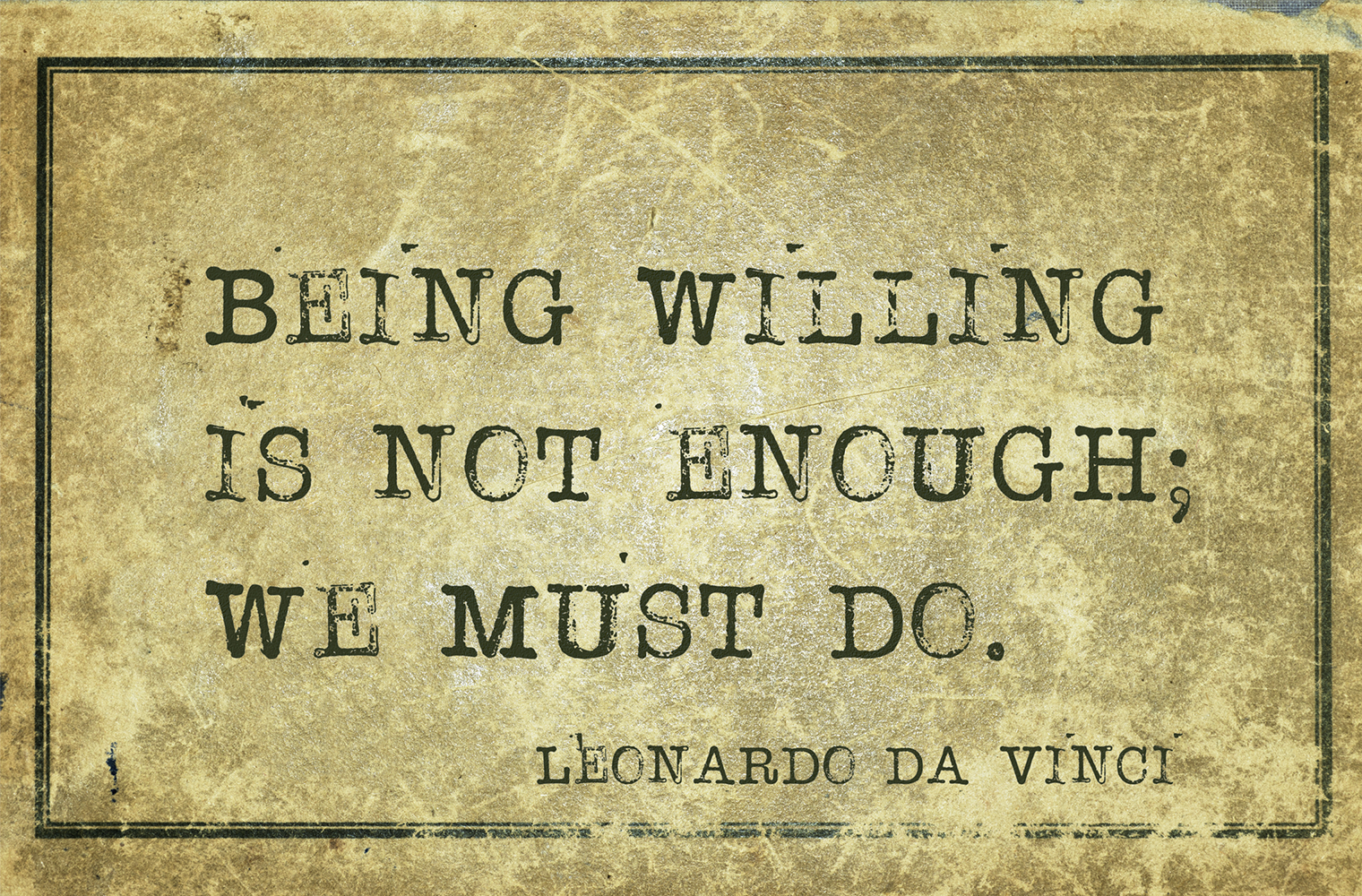
The dictionary defines deeds as an action that is performed intentionally or consciously; a brave or noble act; an action or performance. The word is rich in meaning and steeped in our lexicon. From dirty deeds to doing the deed, we’ve used the word as a verb or noun to express satisfaction, insight, the promise of financial security, sarcasm, or friendly advice. But what of those deeds we do for others or for ourselves? Often it’s not the deed that counts, but rather the motivating force that drives it. With that in mind, I took another look at the dictionary’s definition and thought it needed one more thing: An action that is performed intentionally, consciously, or unconscious of action.
When we talk about brave or noble acts, these are deeds that can occur without conscious intent; they just happen. Often, it can be a situation, scenario, or tipping point that shows up suddenly, or perhaps it’s come upon at a critical moment that impels a person to perform an unexpected and righteous act. Heroism is such a deed; it is often the most selfless deed imaginable, where people in some cases will sacrifice their very lives for the sake of others. But the word hero has been stretched over the years to cover so many deeds, and sometimes people will do things for the good of others when it’s really meant for the greater glory of themselves. That is not a heroic deed; that’s an opportunistic deed. And to paraphrase a pun that’s been around for a while, this is one of those deeds that should not go unpunished.
We’ve all performed deeds in our lifetime; they’re a function of our nature as social creatures. We do deeds for our parents, friends, coworkers, or for someone in need. A friend in need is a friend indeed is a simple yet powerful adage on the value of selfless assistance. And despite what some people out there may say, doing a deed for another person does not require compensation; that’s called a job. When doing a deed for others, we should be clear as to the motivation driving us to perform this act. In a best case scenario, it should come from within; it’s an unwritten pledge to help, support, or advise another person simply because it’s the right thing to do. It should also be an action that makes you feel good. When we feel good about a deed, it speaks to the kindness in our hearts.
And what about selfless deeds? Not to be confused with a heroic deed (which is the ultimate act of selflessness), a selfless deed is a simple action we take to help someone else with whom we may not even interact with directly. Cleaning up after yourself when you finish your lunch in the break room; putting a quarter in a parking meter that’s about to expire; moving a piece of debris from a roadway. These are everyday deeds that take little to do, but effect positive changes in the lives of others.
I say we start a trend that reclaims the contextual power of a deed – an endeavor that promises an action taken for the benefit of two or more people, known or unknown, whose recompense is nothing more than an understanding that it was conducted for the common good of all involved. When we do the deed – that deed – the value of our humanity is proportional to the happiness and comfort we engender to those whom we shall never meet. Those are the deeds we need to strive for, cherish, honor, and admire.


Leave a Reply