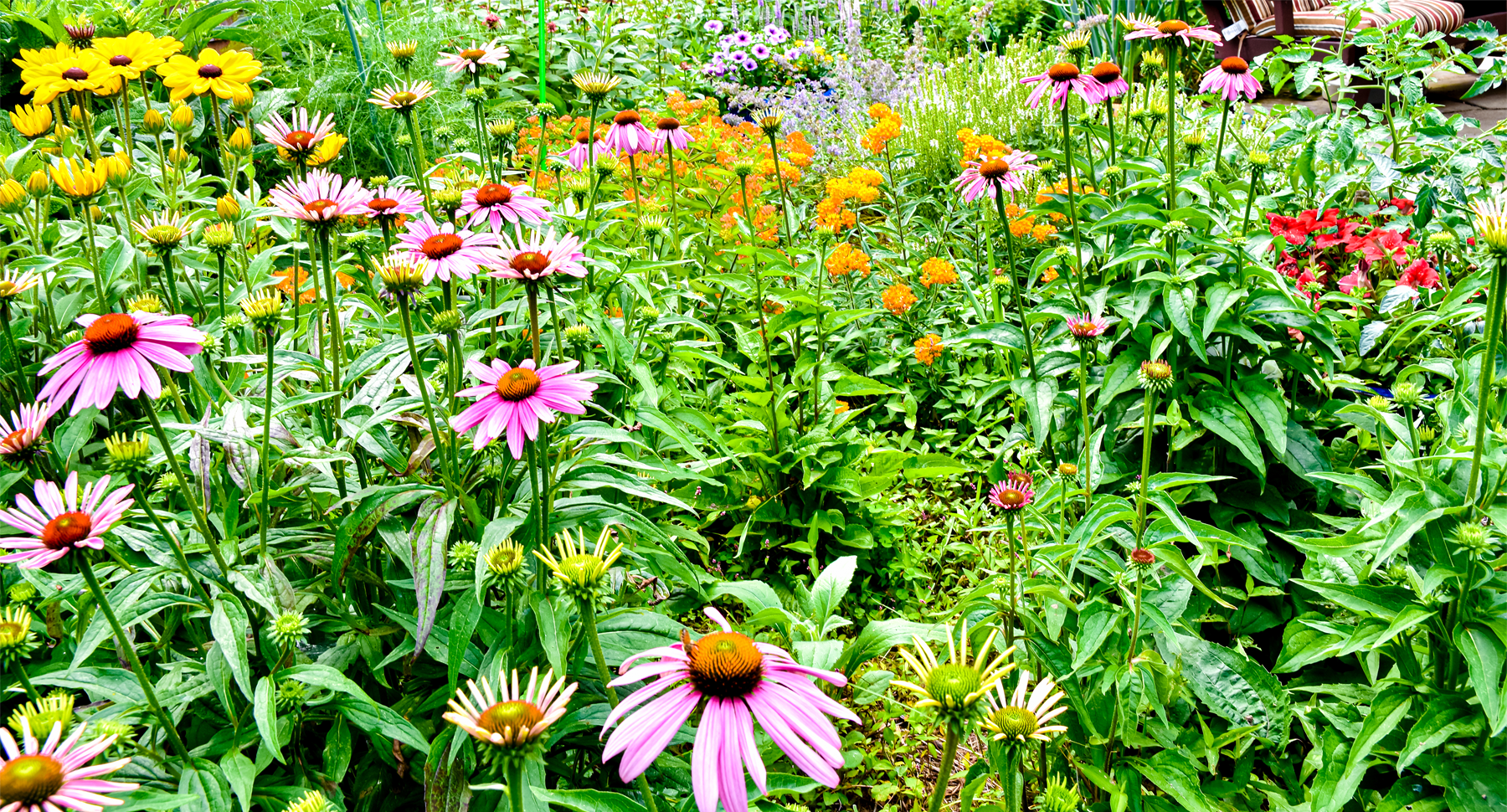
What’s in a name? As summer moves on and our gardens explode with new growth, my attention was drawn to that perennial enemy – weeds. But what are weeds? According to the dictionary, it’s a wild plant growing where it is not wanted and in competition with cultivated plants; any plant that is unwanted, out of place, or unintentionally grown. Apparently, in the case of weeds, beauty is in the eye of the beholder.
Like many folks, I was always on the look-out to create a healthy, thriving garden by ensuring that any weed that dared make an appearance would be dispatched, post haste. I prided myself on well-manicured grounds with aesthetically placed bushes, hedges, and either annual or perennial flowers.
Then we bought a farm.
The best way to describe a farm is that it’s a living organism. No, I don’t mean that neither sarcastically nor naively. The whole of a farm – its pastures, gardens, the surrounding woods, and every creature on it that crawls, hops, burrows, meanders, flies, wanders, leaps, and walks – is a singular, living organism whose parts work together to benefit the whole. The other thing you learn is that you may have bought the farm (realistically; not symbolically), but you do not own it. You are nothing more than an extension of that organism, and as such are bound to a few but nevertheless immutable rules. The number one rule?
You are not the architect of the farm; you’re the caretaker. And the one thing that, as a caretaker, I’ve come to learn is that wild is less of a descriptor and more a state of mind.
A garden is like a marriage between cultivation and wild. And yes, sometimes the cultivation part can drive you wild, but it is a balance of the two that tends to work in perfect harmony. Despite the definition for weeds, wildflowers do not have to be in competition with their more cultured cousins. They can have a harmonious relationship despite your fastidious penchant for the triviality of order.
Dealing with weeds can be revelatory; a non-stop masterclass on the dynamics of life itself if you take a moment to look. Take that definition on weeds: A wild plant growing where it is not wanted and in competition with cultivated plants; any plant that is unwanted, out of place, or unintentionally grown. Now, switch the word plant with person, and what do you see: a wild person growing where it is not wanted and in competition with cultivated persons; any person that is unwanted, out of place, or unintentionally grown.
Weeds, like people, need to be seen for who and what they are. We need to understand that they each deserve to live but live in a way that does not impinge on the quality of life of another. Weeds, like people, do not choose to be unwanted, and will fight to overcome that restrictive mentality. Being out of place is a reductive term, and neither weed nor person will stand for it. And most importantly, there is a place for every living thing in your garden, for they each have a value – a purpose – that makes a garden a paradise.
It’s summer. Go out and tend to your garden. There are so many things yet to be discovered and learned.


Leave a Reply