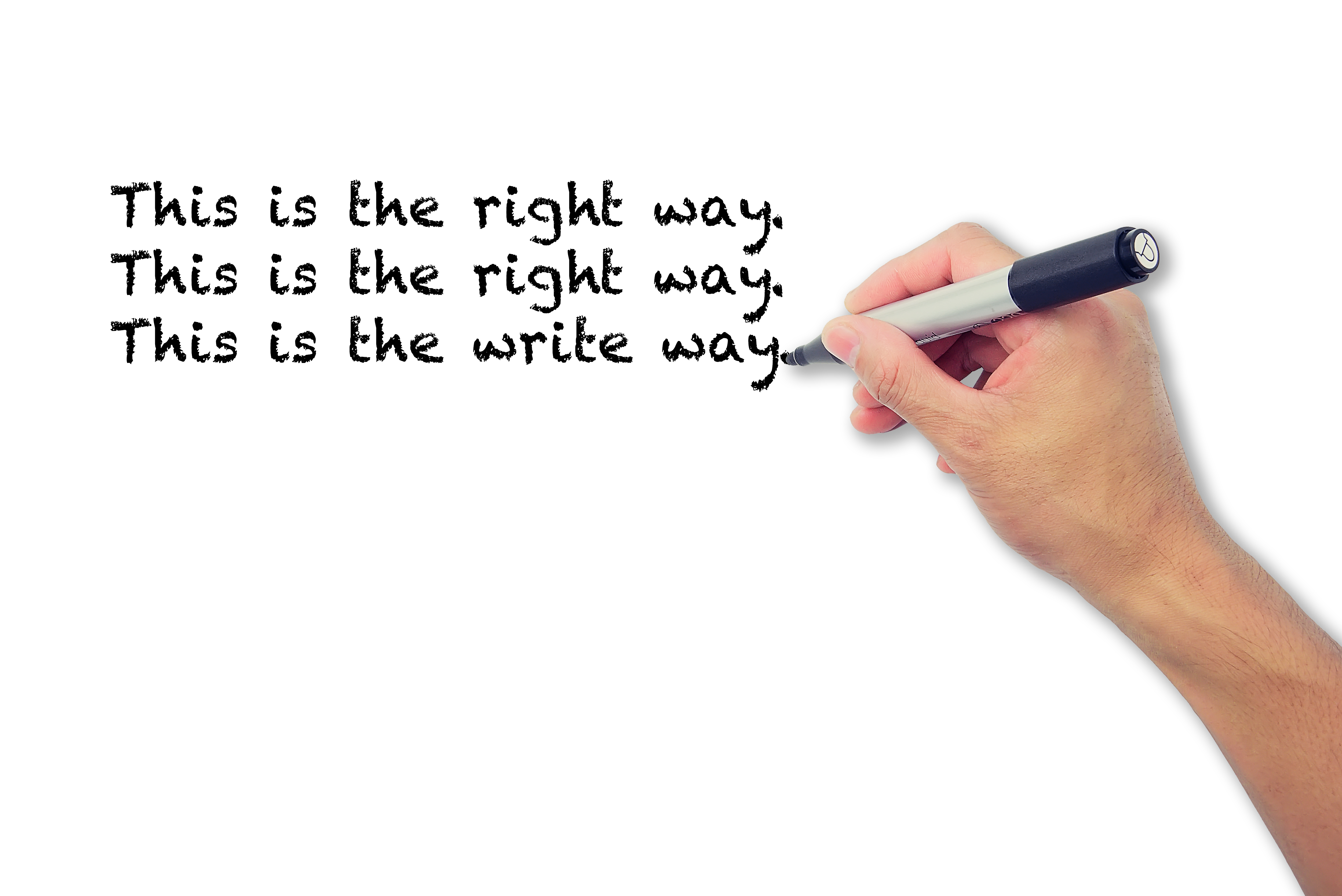
I cannot speak with absolute certainty on the merits of learning by rote in today’s world. Given the overabundance of tools, apps, webinars, and courseware out there (and let’s not forget AI), learning by rote is probably cute at best but probably anachronistic at face value. As a teacher umpteenth years ago, I used to employ learning by rote as a way to embed factoids or foundational information into the ever-expanding minds of younger children. That, coupled with visual cues or experiential activities helped to create a more lasting and well-rounded impression of the world. It also laid a foundation for meaningful recall with a thirst for objective reality to better help guide their subjective thoughts. But in today’s rapid-fire informational glut, there is a concern (at least in this writer’s mind) as to the seductive trappings of repetition.
In the same way our parents used to admonish us to chew our food 32 times before swallowing (and, no – I never found out the magical reasoning behind that number), marketing and communications people blast us with far more than 32 advertisements per day (in actuality, statistics bring that daily number up to the neighborhood of around 76.) During election cycles, every candidate from city clerk to presidential hopeful vies for our attention with a never-ending barrage of email blasts, texts, phone calls, and advertisements on television, smartphones and social media that range from comically crude to dangerously disturbing. So in order to keep this commentary under, I dunno, 100 pages, I’m going to focus on one of the more insidious aspects of rote learning: Repetition Bias.
From a heuristic level, repetition is a dual edged sword. The repetitive nature of facts, figures, ideas or beliefs become stronger and more believable with each iteration. In teaching, this is a simple yet powerful way to deliver certain facts such as historical events, proven social or scientific concepts or computational tables. The aspect of bias in repetition comes from the manner in which repetitive information can be made to support, expand or sway a person’s beliefs or desires. The more you hear certain phrases or statements from multiple sources, the more believable they will become. Tie this in with repetitive statements that aim to heighten the acceptability or believability of a person, place or entity and you have a foundation for obfuscation; the ability to confuse the hell out of people.
There’s a principle called Hebbian Theory or Hebb’s Law that delves into the science behind repetition. Without going into the technical jargon behind it (of which I can only barely scratch the surface), it deals with the study of neuroplasticity. For those of you who are new to that term, it relates to your brain’s ability to learn and expand its capabilities. Learning a new language, becoming adept at a video game, learning to play a musical instrument; all of these are basic examples of neuroplasticity. Hebb’s Law boils it down to a pithy yet accurate statement: Neurons that fire together, wire together. In relation to repetitiveness, it means that the more your brain is exposed to certain statements or activities from multiple sources that you’ve been exposed to as being either good or bad, your brain will wire itself to accept this information as a pattern that has been seemingly vetted through the simple act of targeted repetition.
Each of us employs this type of tactic on a daily basis. For example: You have a friend that tells you about this amazing restaurant called, let’s say, Blackwater Pizza, and that it serves the best pizza in town. You then tell your other friends about this awesome pizza place. Eventually, it becomes an acceptable fact that Blackwater Pizza serves the best pizza in town. That is, until you go there because you have to try this awesome pizza. You take one bite of that luscious looking slice and quickly realize that your friend was insane. I know; it’s a silly analogy. But it’s quite direct in its intent: Repetition bias is an effect that may have its roots in an innocuous moment or statement. Yet it can also be employed in a well-planned strategy to create confusion, doubt, or solidify the flimsy foundation of a downright lie or underhanded intent.
This all takes me back to my thoughts on the weaponization of words. The old adage of sticks and stones may break my bones, but words will never hurt me has quickly moved from a quaint admonishment to a dangerously naïve statement. Words do have the power to promote peace, allay fears or foment war. And if you’ll allow me to hang on to that concept of weaponization for another minute, consider thinking about words like bullets. They cannot do harm on their own if we choose not to chamber them in a weapon. Only then are they instruments that can have wildly opposing effects depending on the way they’re used.
Like everything else in life, we need to be mindful; mindful of the words we use and what we say and how we say them. For words, coupled with a tool such as repetition or rote learning, can have an amazingly positive effect on those around us. They can also be easily converted into a cudgel that will bludgeon the very heart of those beliefs or norms that have stood the test of time and the validation of those who came before us imbued with wisdom and a greater and unvarnished focus on what is acceptable as truth.

Leave a Reply