When my mother passed away, my older sister (Ginger) and I traveled to Florida where our mom had been living for many years. Our main goal was to make arrangements for the funeral and subsequent memorial service, plus handle the disposition of those possessions left behind. While on the plane trip to Florida, Ginger asked me to write the eulogy for mom’s memorial. That was somewhat of a challenge for me, as I had been estranged from my mother for several years. And although I stayed in touch with her, our exchanges were best described as muted.
Once we got to our mom’s house, we addressed the meetings that awaited us as best we could; some commonplace, others surprising. Afterwards, we tended to the task of cleaning the house and determining what to do with her things. Although I found the process somewhat mechanical, my sister had a tougher time dealing with it. I came to realize that for me, the instinctive routine was an escape mechanism; a way to move past the moment and avoid any emotional crossroads. Most of the items were packed and shipped back home; others awaited a quick and less ceremonial ending. But there was still the eulogy to be written, and though I tried to come up with something to say that would address the full measure of my mother’s life, all that came out sounded distant and judgmental.
It was 4:00am when I awoke on the day of the memorial and still had nothing written. Then as I was sitting up in bed, an idea suddenly formed in my mind. Not an idea so much as it was a revelation; an understanding. I picked up my laptop and drafted a free-form poem called Trinkets in one stream of consciousness. I didn’t bother to read it; I barely had the energy to understand it. I put the laptop down when I was done and went back to sleep.
Later that day at the memorial, it was my turn to get up and deliver the eulogy. I grabbed my laptop and went up to the podium. I mumbled some apology about not having time to print out what I had written, then took a minute to read what was on the screen. I froze. Not because of nerves, but because as I scanned the page, I realized that I had captured the essence of a 40+ year relationship with my mother that was clear and to the point; something I was never able to share with her in life.
Fast-forward to twenty-seven years later, right after my beloved CeCe had passed away. I was standing in the middle of our living room thinking about what I needed to do next. I wanted to restore our home to the manner in which it existed before the specter of cancer turned it into triage center. As I wandered about, I caught sight of the plastic bag I had used to bring back CeCe’s possessions from the hospital. On it was printed a utilitarian phrase: Patient Belongings – Name & Room. Suddenly, the memory of Trinkets came rushing back, but the perspective was different. I needed to make a list of CeCe’s belongings. Each would receive a name within an inventory list that would determine their fate. And above all, I needed to assess which items I would keep that might bring joy and comfort into my life and allay the pain of loss, giving our love room in which to live in peace. Everything else would find a new home; a new beginning and perhaps an opportunity to give someone else a measure of hope and fulfillment. The nature of that realization was staggering yet sublimely natural. And it was a gentle reminder that even the most innocuous of things hold the power to create great change and engender wisdom to heal a broken heart.
I hope the message of Trinkets will resonate with you, and help you find a way to discover the intrinsic wisdom of choice.
Trinkets.
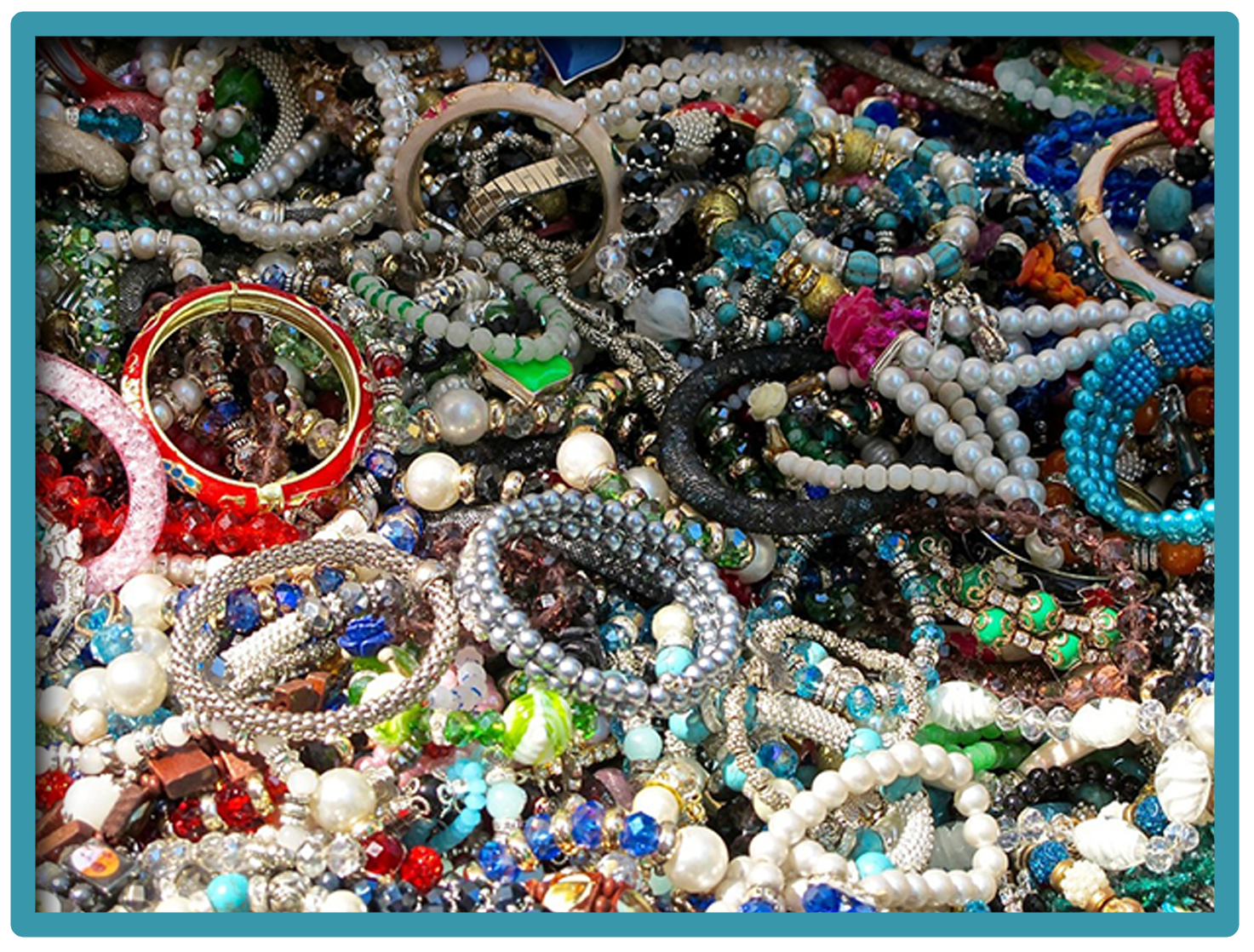
There are always lots of trinkets.
A statue here, a bauble there; a stack of papers, a lump of clothing.
Some are ugly; some are nondescript; some are delicately winsome and sublime.
They are the mementos representing some deep emotional hunger driven by unknown passions, needs, or fears.

Trinkets.
I cannot help but sense a story within these abandoned pieces. Short, silent lessons depicting instances rich with experience and wisdom. A consequence of aging has brought me to this moment in time, where I stand at the crossroads of a life long-lived, yet seldom praised. I'm now faced with the task of writing the coda to this symphony, though I was seldom privy to its music.

But no mind. There are still those trinkets. Hundreds of little things that are like snippets in time, giving life to flesh and bone - possessing the power to attract and entertain.

I scurry about trying to find the right place for each item. Not one piece can be made to suffer the indignities of abandonment. Each must find a home; each must find a resting-place in which to begin a new phase of life. Trash or treasure, their fate will be decided with little thought as to future consequences. They all need to be freed from the loss and turmoil of the moment.

As each possession is united with its counterpart, I cannot help but experience the emotional ties each one carries in its form. The shape, the smell, the aging signs, its origin - all work together to lure my subconscious into another time and place, where childhood antics and maternal apprehensions still thrive, as if each were encapsulated within a plastic snow globe for me to shake and watch whenever the mood struck me.

So many memories, so many fears - so many decisions left unchecked. So many trinkets.

As the days passed, I learned how to collect these mental images, placing each within its own category - marking each group as bad, or good, or to be kept, or to be given away. It was good to spend time sorting those trinkets. The cleansing of both house and spirit made room for other lives, other experiences, other chances. In the end, I'll be left with those things that will bring soft pleasures into my life. In the end, I'll be left with goodness in my life. In the end, that is exactly what she would have wanted.

Trinkets. I now see the wisdom of choice.
Leave a Reply