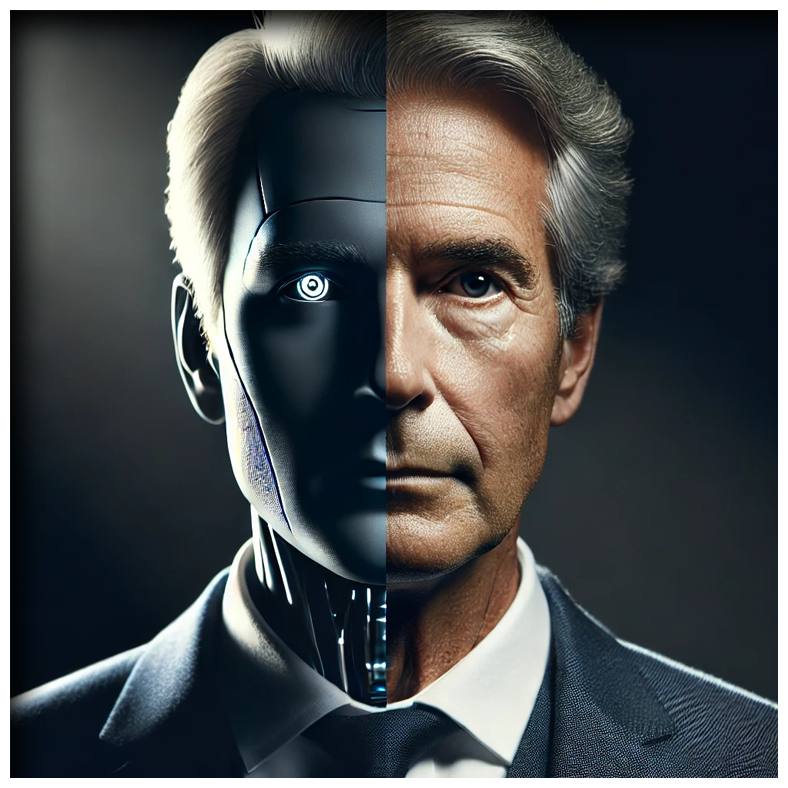
Several years ago I wrote that technology had become a generational thing. And that was at a time when personal computing (i.e., desktops, handheld devices, and smartphones) had permeated every facet of our lives from communications and entertainment to education. Today, computational machines on vast distributed networks using highly advanced artificial intelligence (AI) algorithms have managed to penetrate practically every component of our daily lives from the commonplace to the complex. To paraphrase one of Sting’s songs, every move you make, every step you take, they’ll be watching you. And this entrusting of our societal norms and interactions wasn’t accomplished through intimidation, force or any manner of covert takeover. It was achieved through a willing and collective fervor that anticipated nothing but good; a way to take our species to the next intellectual, societal and collaborative evolutionary stages. Insert emoji here of person smacking forehead with open palm.
I’ve been expressing my admiration for tech ever since I first laid hands on a Commodore VIC-20 and saw units like the Osborne Portable Computer edging their way onto the consumer market. As an educator, I saw its potentiality in the classroom and became an early proponent for its use in overseeing aspects of training development, business management and more. Technology serves a purpose for humanity in that it can do most things faster, safer, more accurately and provide answers when all the aforementioned adjectives are seen as critical components for success.
But here’s the rub: The use of technology is addictive. Addictive because we humans tend to gravitate towards those things that provide a perceived sense of safety, strength, security, comfort or power. It’s my humble opinion that most of us accept this as a matter of course, though we will rarely fess up to it. Historically, we have gone to great lengths and expense to acquire or attempt just about anything that would build up our standing in this world, be it for personal aggrandizement, pleasure, or a perceived sense of immortality. Sex does it, a drug does it, money does it; and now a little silicon-based chip wrapped in shiny, space-age polymers does it.
For over 25 years, my caveat regarding the use of technology has centered on this premise: It’s not what it does for us, but rather what it does to us. And the gratuitous proliferation of technologies primarily for the sake of improving profit margins or expanding territorial superiority (in whatever socioeconomic form that may be) is beyond troublesome; it’s dangerous. Like those other addictions mentioned earlier, we will stop at nothing to possess them, often at the expense of selling off that intrinsic and most valuable part of ourselves which makes us uniquely and beautifully human. We were made to be an amalgam of imperfections and wonders by whatever universal power or spiritual entity you wish to follow. More importantly, we were all made to be part of a greater organism; a grand experiment that relies on the sum of its parts to create a greater and more evolved version of itself. To borrow a piece from Ehrmann’s Desiderata, we are children of the universe, no less than the trees and the stars; we have a right to be here. Machines, however modern, marvelous, or ubiquitous should not be seriously considered as a key element of that affirmation.
There’s no doubt that a selective process brought on by automation imbued with speed and accuracy is an advantage within any business or automated construct. But it’s nothing more than a mechanical affectation when it comes to us bipedal organisms. We shine when things get messy or turned on their ear. Mistakes are the gateway to greatness in the hands of creative persistence. And although a machine or AI-based LLM might be able to cut to the quick, it provides no long-term meaningful lessons or even imperceptible moments of inspiration or introspection that, when allowed to share center stage with our consciousness, helps to expand our emotional DNA.
Technology exists to make things easier, safer, and to provide solutions that would expand the availability of basic human needs on a global scale. Technology improves the efficacy and accuracy of medical procedures and provides answers to the ever-growing field of pharmacology. It even does wonders to expand our knowledge beyond the borders of our own skin. But with very few exceptions, technology should not be seen as a means to improve or replace our manner of interpersonal communications. You do that by simply waking up each morning, taking in what the day gives you as you go along, and then reasoning the actions and reactions you’ll make that hopefully speak to the greater good within you and those around you.
According to the dictionary, progress is defined as the forward or onward movement toward a destination; an advance or development toward a better, more complete, or more modern condition. I would posit that technology epitomizes that definition in many ways, and it represents one of our crowning achievements as sentient beings on this earth. But technology is our creation; not our teacher, our counselor, or our replacement. We should be wary of our tendency to use technology as the path of least resistance. That which makes us slower, messier, and oftentimes imperfect celebrates the very nature of our humanity. In those instances, time is not an opponent but rather a teacher from which to learn, and thus we should be mindful on how we proceed within that relationship. We need to take a closer look at what lies at our core; at what drives our dreams, our creative fervor, our aspirations and each other. For if we relinquish what makes us human to a cybernetic facsimile for the sake of creating a more perfect, efficient, or socially accepted representation of our intellect or creative prowess, we will be doing nothing more than devaluing our place in the world. I wonder: If we were to go down such a path of sterile evolution towards an apportionment of higher awareness without the benefit of our conscience, what valuation would our technologies make about us in the very near future?
Leave a Reply