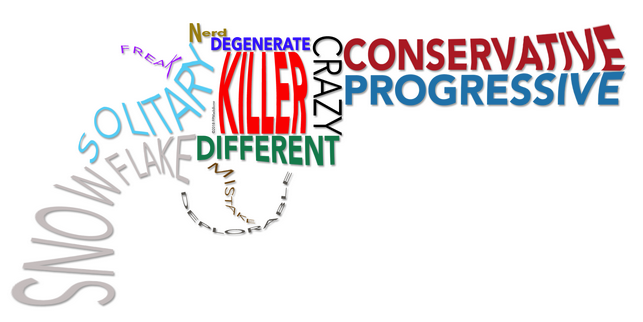
No, that’s not a typo. That errant dash in the title of this commentary didn’t slip past the spell checker. I am referring to what Webster’s Dictionary defines as the vocabulary of a language, an individual speaker or group of speakers, or a subject. It’s that wondrous amalgam of characters we call upon each day to express our thoughts, demands, appeals, ideas, desires, anger, frivolity, passion, revenge, love – well, you get the idea. Words are one of the most ubiquitous ways we communicate with one another. They have been around since time immemorial and have been used to weave together some of the most magical, powerful, inspirational and frightful ideas ever to cross the collective mind of humanity. Each generation has a hand in shaping the lexicon that surrounds it and with each subsequent generation, that shaping has stretched far beyond its sociological borders.
The impetus for this write-up came from an innocuous conversation I had with my beloved wife years ago. I was telling her about a meeting I was preparing to attend and she kindly offered to gather some facts in support of my case. In so many words, she said that she would research a few things that would provide some ammunition for the encounter. Ammunition. The choice of that word caught my attention, so I brought it up to her during our exchange.
She noted that some of the attendees might employ a prejudicial tactic, and in such situations people on the receiving end may be placed in a position of having to defend their comments or opinions. By using the term ammunition to describe the countering talking points, she was purposefully underscoring the potential antagonistic nature of the meeting and thus presenting a response that would help to counter the probable adversarial tone from those in opposition. Her kind yet keen analytical mind was and always shall be one of the many things about her I shall always love and treasure. And aside from possibly channeling a cautionary lesson from Sun Tzu, my beloved had a point. Despite the seemingly reactive nature of her thoughts, they delivered the message loud and clear. They also reminded me of the many observations I had articulated in the past concerning the aggressive side of language, and how such practices had seemingly stepped up the ante in the past few decades.
Abends
During a discussion in which I participated years ago, I brought up an observation about how some segments of the business and service industries had begun revising the titles of many of their job functions in an attempt to give them greater appeal. More to the point, they were being changed because many were getting harder to fill. And when they were filled under the old designations, many of the people within those roles found themselves pigeonholed within an unspoken classification that often diminished the true nature and importance of their work (a sociological error on many levels, in this writer’s humble opinion.) Cooks were becoming chefs; secretaries were becoming administrative assistants, and garbage collectors were morphing into sanitation engineers. Suddenly, industries were embellishing titles to help elevate their status; to elevate the perception of their status. The roles were still the same; they were still essential to the fabric of commerce, communal support and socioeconomic growth and well-being. Nonetheless, the aggrandizement continued to proliferate through every aspect of society. Suddenly, words that once held a very specific meaning had changed. More importantly, they were diminished because their singularity – the essence of their meaning that helped identify who and what they represented – became muddled, confusing; misleading. People who collect garbage do not by nature possess an engineering degree, yet the work they perform is incredibly important and vital to the health and efficiency of any society and should not be taken lightly nor with any degree of condescension. We should not have to embellish a title with the moniker of another to imbue it with some perceived sense of social stature. Any position that performs a service for the benefit of others is damned important enough, and should be accorded every measure of support, thanks and admiration.
Back to Basics
I do apologize for digressing from my original intent; it’s the curse of writing near a soap box. The aforementioned argument pertaining to role designations is certainly deserving of its own forum. But right now, I want to get back to the issue of that word I wrote about earlier – ammunition – and the manner in which it was used during the course of a passing conversation. Although the focus here isn’t necessarily about a given appellation, it does relate to the aspect of using a word to infer a significance that was not part of its original meaning or genus.
Nicknames or designations are in many ways, a rite of passage. When I was young(er), there were a variety of terms that kids used to describe one another, adults, or any manner of establishment or relevant associate. Some were terms of awe or respect; others were used for discrimination or derision. Regardless, they were part of the modern lexicon – modern in terms of the times in which they existed. Many of those survived the times through adaptation; despite the nickname, their essential meaning stayed the same. Brainiac, genius, whiz, egghead, nerd. In each instance, the referential meaning never trailed far behind. But what about the meaning behind a word? What happens when we start to use words not only to change their meaning (such as the role designation flip-flop we saw earlier), but to alter the value or emotionality behind a given situation or conversation? What happens when we weaponize words?
Bombs Over Webster
Weaponizing words is not a new thing. From poets to performance artists, words have had their connotation packed with explosive significance in a variety of ways for generations. But one aspect of this literary metamorphosis that has grown in appeal throughout the years pertains to the use of words that were once reserved primarily for inanimate or worthless objects now being used to describe humans and all parts thereof. Some of these came about from cultural fads or social pressures. But regardless of their genesis, a palpable shift had occurred in the last few generations whereby the fundamental value of human beings and their representational nature has slowly been reduced to demeaning objectification as a form of ridicule, humor or entertainment. The language of the bully or self-serving opportunist, once regarded as distasteful, has surreptitiously slipped into our mainstream vernacular. Many dismissed this shift as a rite of passage; a way for successive generations to make their mark on the linguistic landscape. This supposition is perfectly natural but does not necessarily explain the apparent need to denigrate, given our purported standing as the top sentient social animal. From random dysmorphia to the slightest deviation of a perceived normality, little escaped this wholesale devaluation. Through various channels of entertainment and mass communication, the characterizations within storylines continued to be less complex and tawdrier in nature, with misanthropic behavior patterns reinforced by language that cast aside any relevance as to the importance and fundamental value of life. If you believe in the principles of cause and effect, it stands to reason that a pervasive attitude towards degradation and abasing will invariably change how we see ourselves. It will change how we treat one another as we lose that perception of who and what we really are and the integral value we each bring to the global scene.
Unchained Melody
In deference to (and quite a stretch from) the Righteous Brothers’ hit song from a billion years ago (OK, 1955), the words we use – that we weaponize – create a communications chain reaction in today’s social landscape that takes little time to reach every corner of the globe. For most, they fascinate and entertain. But for those who reside beyond the reach and nuanced understanding of the originating language or message, they confuse and confound. Either way, they create a shift in our understanding of one another. More importantly, they create a catalyst for the erosion of our social standards, acceptances and interactions. They grant unspoken permission to opportunists and saboteurs who would use disparaging language as a means to sway a conversation or a belief, simply because they don’t possess the chops to do so intellectually or the courage to do so emotionally. Sticks and stones may break our bones, but words will always be the ones to magnify anger, heighten depression, widen differences and lead us all to the brink of war. At the next conversation you happen to find yourself in, take to heart the words – the ammunition – you choose for the exchange. Remember that anyone can hurl a nasty epithet or disparaging word, just as it takes little imagination or intelligence to hurl a rock. How you wish to express your thoughts and your opinions of others (and all that surrounds those ideas) will lay the framework for what you hope to build or aim to destroy.
Leave a Reply